

Author & photographer: Leah Pattem
On the outskirts of Leganés, the crumbling Church of San Pedro de Polvoranca stands as the last trace of a village abandoned by disease, neglect and decades of unresolved responsibility.
A short walk from the Cercanías stop at Parque Polvoranca leads to the surprisingly well-preserved ruins of a deserted village and its abandoned medieval church. In the middle of a grassy park on the edge of Madrid, the Iglesia de San Pedro Apóstol de Polvoranca stands unconfidently behind a metal fence, colonised by a hundred circling crows.
Built of red brick on top of a stone plinth, the church follows a traditional Latin cross plan, with a single nave, side chapels, and a barrel vault. A burial crypt lies beneath the structure. From the side, the building appears largely intact, but deep vertical cracks split its side into three sections, giving the unsettling impression that a strong gust of wind could bring it down.
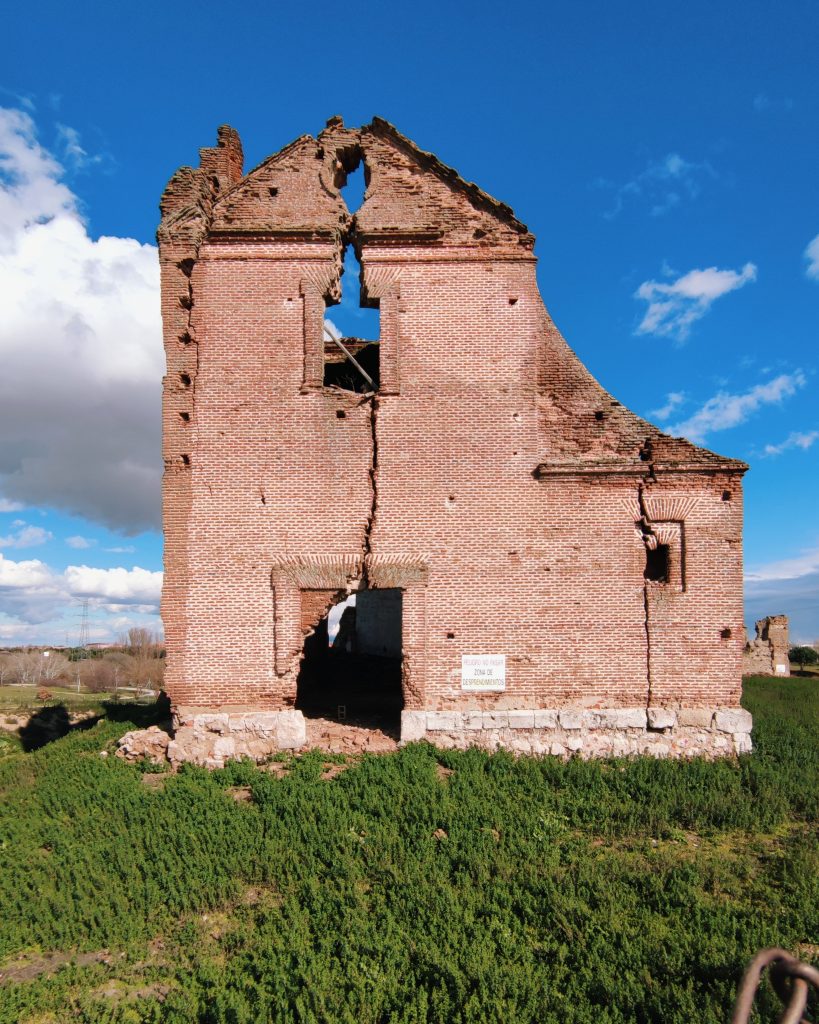

Nearby, scattered stones mark the remains of the final houses that survived the village’s abandonment, which were also home to a famous poet. According to a 2016 El País article, Polvoranca remains cursed, Fray Luis de León once lived here. He is the author of the line, “What a restful life is that of him who flees the worldly noise.”
Beyond the church, grass and shrubs cover most of the settlement remains, but the village outline can still be traced in shallow depressions and fragments of brick foundations. Beyond the metal fence, you can freely walk through the old village, but you might not sense it until using Google Maps for a bird’s-eye view of the medieval floor plan.
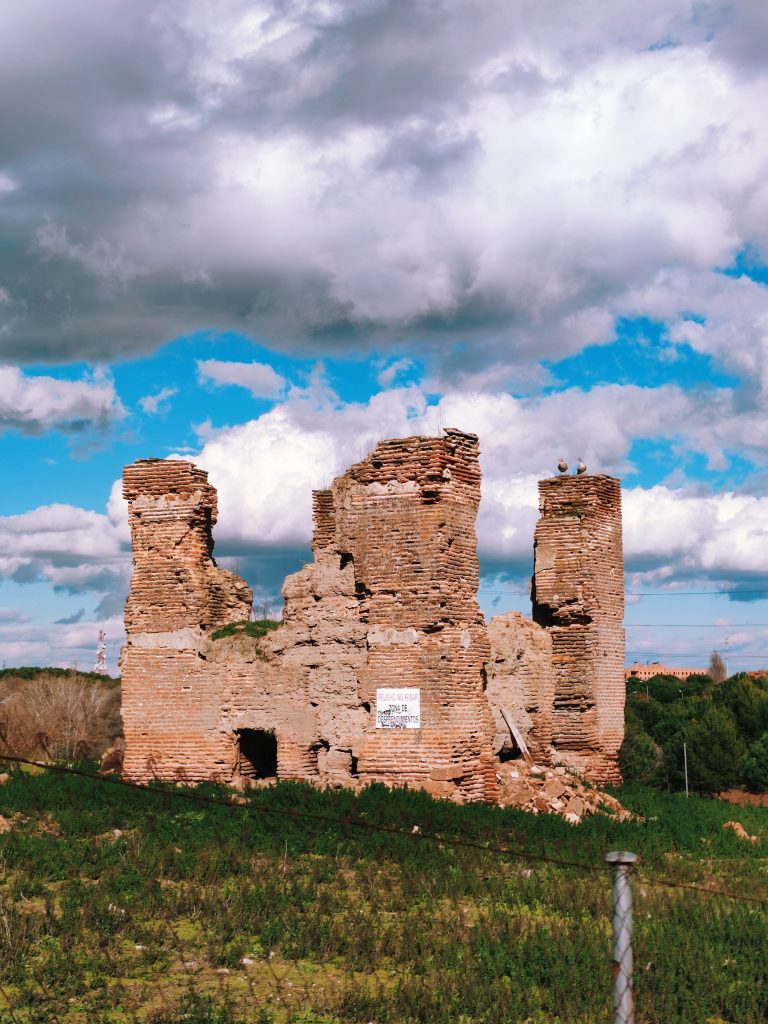
The village of Polvoranca dates back to 1575, around the time Madrid became the capital of Spain. In 1655, the Church of San Pedro was built and soon became the social and religious centre of a community that reached about 250 residents at its height. The church stood beside a series of lagoons, some of which still remain. While the water supported local life, it also brought repeated outbreaks of malaria that severely reduced the population.
By the 19th century, the church had fallen out of use and was formally deconsecrated. In the early 20th century, the last inhabitants left Polvoranca, and the church was abandoned to decay.
In 1998, the city of Leganés declared the church a protected building. Since then, restoration proposals have surfaced intermittently, but funding has remained scarce and responsibility unclear. Around a decade ago, the PSOE urged the Community of Madrid to restore the church and safeguard the archaeological site.
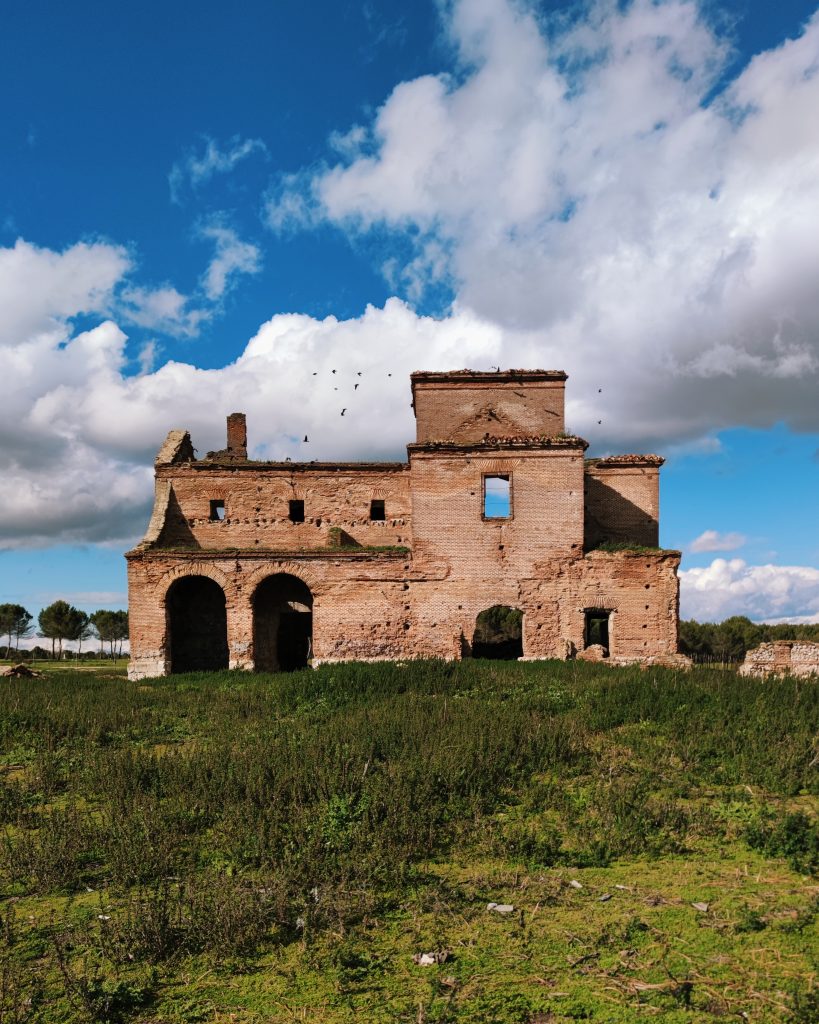
Although Polvoranca is a regional park under the community’s jurisdiction, the ruins themselves belong to the Leganés City Council, which granted them full protection and included them in its heritage catalog. Over time, however, priorities shifted, and the regional government has distanced itself from the issue, arguing that it is a municipal matter.
During a pre-restoration study in 2005, El Mundo reported that an excavator uncovered human remains, including leg and arm bones, a complete skull, and fragments of others. The test pits were later covered to “prevent possible desecration.” According to TeleMadrid, local police have occasionally intervened to break up occult-style rituals held among the fallen columns. Esoteric symbols, including a pentacle, have appeared on the walls.
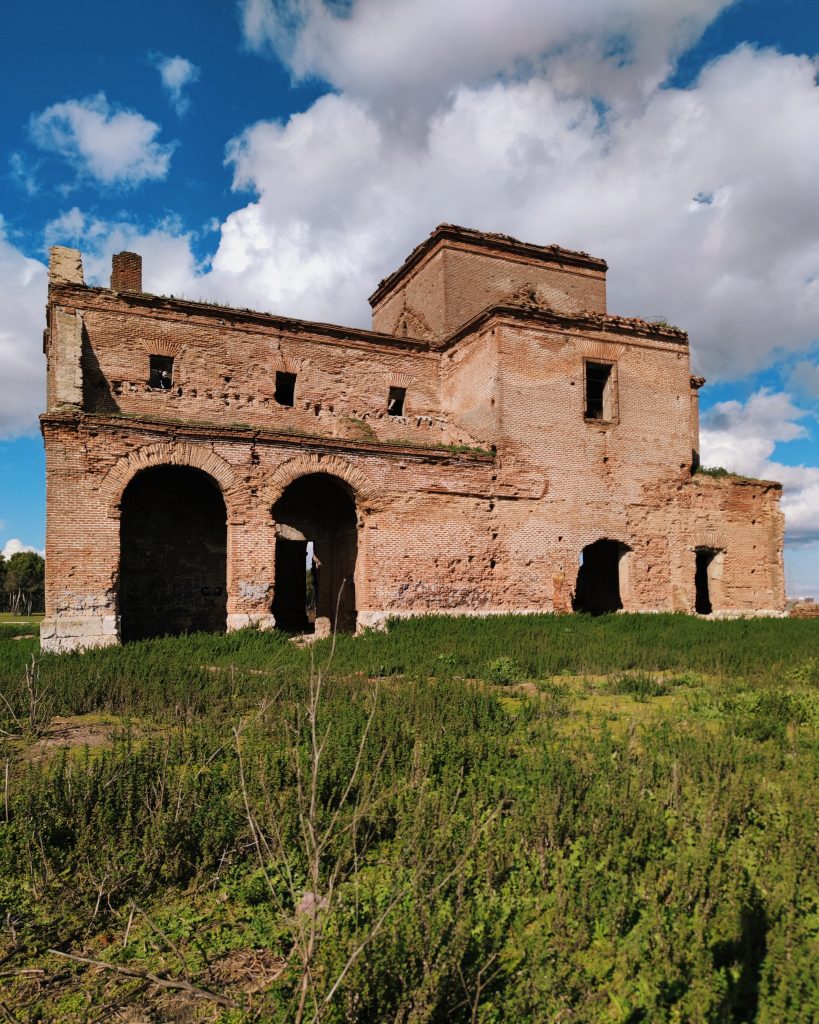
In 2014, the church was added to Spain’s Red List of Endangered Heritage. The designation briefly revived public interest, prompting petitions, local campaigns, and a resurgence of the group Salvemos Polvoranca. Still, no substantial action has followed and the church remains on the verge of collapse. But it’s a creepy and curious site on an otherwise lovely walk through a grassy park on the outskirts of Madrid.
- Location: Leganés
- Nearest transport: Cercanías stop Parque Polvoranca, line C5
- Warning: do not enter this building, it is extremely unstable
SUPPORT THIS PLATFORM FROM €1 PER MONTH
You may have noticed that I don’t run ads, nor accept sponsors or investors. Independence is everything and what I decide to publish will not be influenced by those in a position of capital, privilege or power. Therefore, I invite only you to support this platform and only you to help me keep doing what I do. Thank you, Leah.
Support MNF for as little as €1 per month, which you can cancel at any time.
Leave a Comment