
Author: Leah Pattem / Photos: Dani Piedrabuena and Leah Pattem
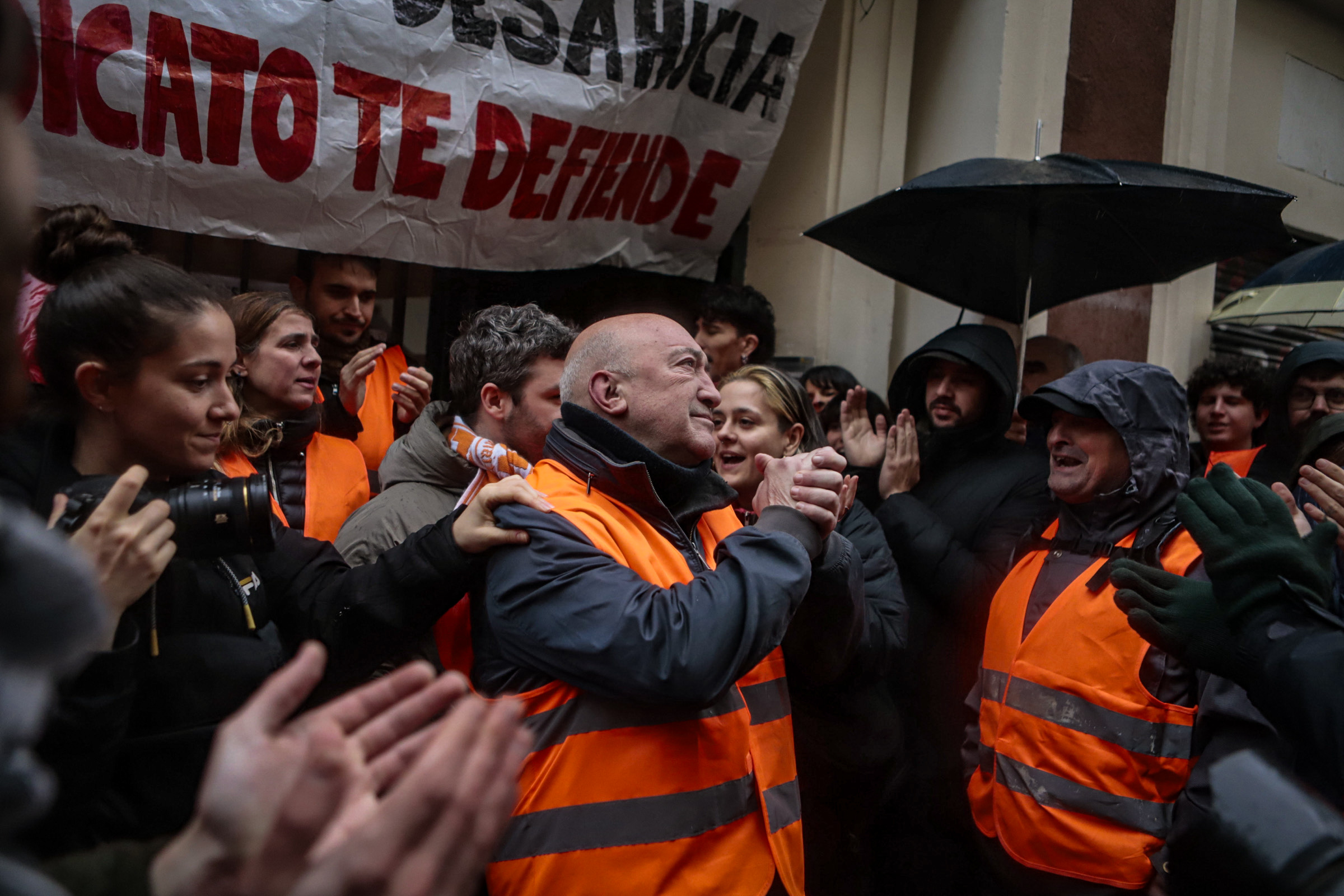
At around 5.30am, just as the birds began chirruping, members of Madrid’s housing movement began gathering outside Mariano’s home. While the sound of neighbours talking at that hour is not unusual here, the mood on this occasion was tense. Between embraces and murmured complaints about lack of sleep, there was an unmistakable nervousness: after three previous attempts to remove him, Mariano was facing what he feared would be a fourth – and final – eviction order, this time signed off by a religious institution.
The Venerable Third Order of Francis (VOT), a Madrid-based Catholic order with deep historical roots in the city, owns more than 100 apartments across the capital, in addition to the centrally located Francisco de Asís Hospital. Among its holdings is an 18th-century complex of homes and antique shops arranged around a private courtyard in one of Madrid’s older neighbourhoods, El Rastro. Mariano, 67, has lived in one of those apartments his entire life and, just hours ago, he believed he had just minutes left in the space he calls home.

In January, Madrid’s right-wing Partido Popular (PP), supported by the far-right party Vox, voted to overturn an anti-eviction moratorium that had protected around 60,000 vulnerable Madrid households from removal without alternative housing, and Mariano is among the first affected. His situation appears to be a case of real estate harassment – VOT are claiming his apartment needs urgent renovations, but will not let him return once they are complete.
For decades Mariano held a renta antigua, a form of rent-controlled lease common in Spain before the devastating liberalisation of the housing market. In recent years, however, the religious order introduced substantial rent increases, raising his monthly payment to €600. When the pandemic cost him his job, the new rent quickly became unmanageable and he fell into arrears. He says he repeatedly sought to negotiate with the landlord, proposing to repay the debt in instalments or even to work as a caretaker within the building, but the order declined to negotiate.
Legal proceedings followed and two previous eviction attempts were suspended after Mariano successfully demonstrated his vulnerability under the moratorium provisions. A third was scheduled for late January, and the fourth was set for this morning.

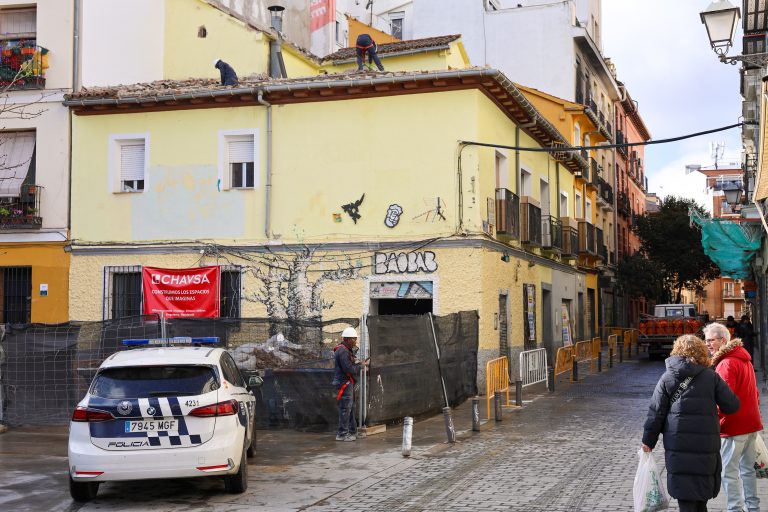
Meanwhile, the state of the apartment has drastically deteriorated. The ceilings in the kitchen and bathroom are close to collapse, forcing him to navigate around scaffolding erected inside the flat, while damp spreads across cracked walls. Last November, part of the kitchen ceiling gave way entirely, and Mariano insists that he does not wish to continue living in such conditions, yet neither does he accept that the only solution is to be permanently displaced from a home that has anchored his family for generations.
The Sindicato de Inquilinas argue that renovation works has increasingly become a mechanism for dislodging long-term residents from rent-controlled properties, allowing landlords to reintroduce apartments to the market at far higher rates. However, neighbours are fighting back and, next week, in Spain’s first ever court case centred on alleged real estate harassment through sustained construction works, legal action will be taken against the landlord, Elix Rental Housing, whose tenants on Calle Tribulete 7 claim they have been forced to endure months of major building disruption from morning to night, where corridors are flooded and cables hang from the ceiling.

Religious landlords, once perceived primarily as charitable or custodial institutions, are rightly facing growing scrutiny in this context. VOT, a substantial Catholic entity with significant real estate assets, benefits from tax exemptions granted to church organisations. The Sindicato de Inquilinas argues that institutions with such holdings possess more than sufficient resources to maintain their properties adequately and to guarantee genuinely affordable rents, but they choose not to in favour of property speculation.
Shortly after 8.30am this morning, two riot police vans arrived at the end of the street. Officers stepped out, fastened their helmets, lowered their visors and formed a frontline that sealed off one entrance to the street. Activists continued to chant, “Mariano, you are not alone,” then, in an unexpected turn, the officers rapidly withdrew and their vehicles departed without explanation.

For now, Mariano’s eviction seems to have been halted and no new date has been set. It seems pressure from the Sindicato de Inquilinas and substantial media coverage, especially of this morning and the previous eviction attempt in January, may be the reason.

Standing outside the building at 9am Mariano appeared relieved, flooded with emotion and strength, but also cautious. He told reporters that he had received no notification of a further order, though he, and many others, remain convinced that the pressure will continue and that the religious order has little interest in reaching a compromise. Amid a growing reckoning over the role of religious institutions in Spain’s housing crisis, Mariano plans to stay put.
SUPPORT THIS PLATFORM FROM €1 PER MONTH
You may have noticed that I don’t run ads, nor accept sponsors or investors. Independence is everything and what I decide to publish will not be influenced by those in a position of capital, privilege or power. Therefore, I invite only you to support this platform and only you to help me keep doing what I do. Thank you, Leah.
Support MNF for as little as €1 per month, which you can cancel at any time.

Leave a Comment