
Author: Leah Pattem
Story also published in El Salto Diario (Castellano)
Complete lack of labour inspections inside the Spanish home, where migrant domestic workers live, enables employers to evade accountability, breeding a colonial mindset where wrongdoing no longer even registers as wrong. If Pedro Sánchez is serious about intersectional justice, his government must enact immediate, concrete action.
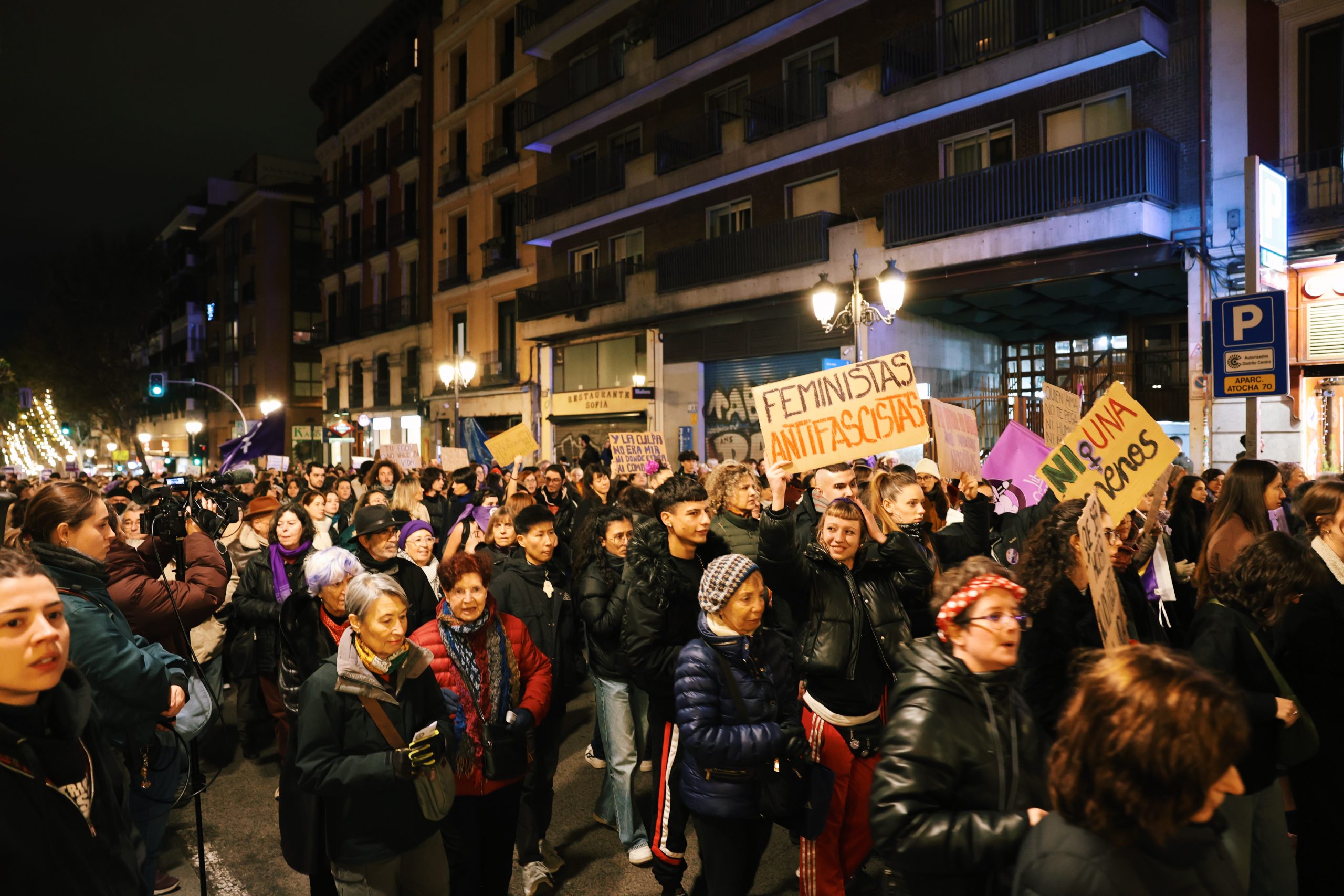
Around the world, Spain’s announcement to regularise roughly half a million undocumented migrants has been widely hailed as a landmark step towards justice. International newspapers are applauding the Spanish government for launching one of the most ambitious regularisation efforts in recent history, framed as supplementing a shrinking population while extending equal rights to irregular workers.
But while the country basks in the spotlight for all the right reasons, especially among growing anti-immigrant sentiment elsewhere in Europe, we’re being watched closely. Can our government set a precedent in tackling Europe’s migration crisis? Maybe. But does regularising half a million migrants really mean they will also have equal rights? Far from it.
While some of the 500,000 irregular migrants who will soon get their papers come from economically developed countries, their situation differs profoundly to that of the working-class migrant fleeing gang violence, war, famine, climate disasters and poverty. This is the group of migrants the law could profoundly benefit, but only if we address a contradiction in their current working conditions: that their workplace itself is unsafe.
One of these unsafe workplaces is the Spanish household, responsible for the employment of more migrant domestic workers than any other nation in Europe. Within this workplace, gender-based violence remains widespread – even towards migrants who have legal status.
Spain’s domestic workforce ranks among the country’s lowest paid and most overworked. Women make up 95.5 percent of the 350,000 registered domestic workers, and 43.5 percent are foreign-born, according to 2023 data from Spain’s National Statistics Institute. The actual number may be much higher: up to twice as many are thought to live in undocumented circumstances, facing a whole new set of hardships upon arriving in Spain.
In February, I published an in-depth investigation on gender-based violence against domestic workers. Over nine months, I interviewed and surveyed 106 female migrant domestic workers across Spain about their experiences of abuse in their workplace in the last 10 years. A shocking half of the women I surveyed reported experiencing a range of violence, from verbal abuse and stalking to harassment and rape. Yet none of them filed a police report.

What was also revealing was that over half of survey participants who do have a legal right to work still reported gender-based violence in the workplace. The fact that none of the women I spoke to – not even those with papers – had filed a police report makes it clear that legal status alone does not eliminate their risk of experiencing gender-based violence in their workplace.
Regularisation may reduce the specific vulnerability of being undocumented, but it does not dismantle the historic societal structures that enable abuse of power. Whether consciously or not, pockets of Spanish society continue to believe migrants are less entitled to protection and justice. This dynamic is particularly prevalent in the domestic work sector – a hidden workplace that reproduces colonial-era hierarchies of class, ethnicity and gender within the intimate space of the family home.
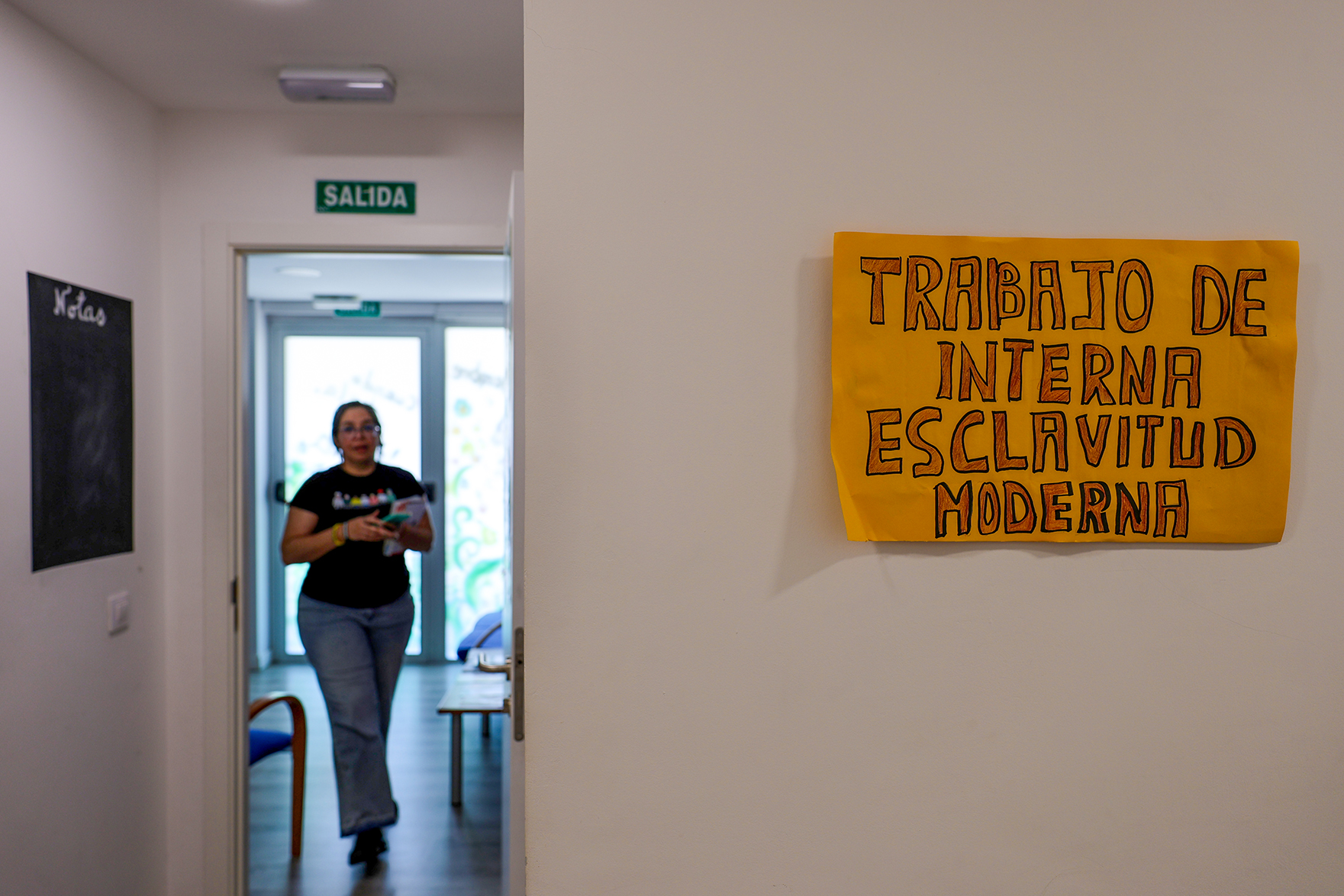
Hundreds of thousands of households across the country consider it perfectly normal to hire a migrant woman to live and work inside their home, and expect many of them to work more than 40 hours and for less than minimum wage. Based on my research and interviews, an alarming proportion of employers also consider it acceptable to erode – or outright violate – the human rights of their domestic worker.
Who are these men – and women – who adopt this colonial logic toward migrant women in modern Spain? These individuals are not on the margins of society, they hold prestigious, well-paid positions and are respected professionals, neighbours, parents and public figures. They move through life cocooned by wealth, power and status, untroubled by the systematic harm they inflict on those they have made even more vulnerable by inviting them into their homes.
The domestic work sector in Spain ties a migrant woman’s livelihood, and often her housing too, to a single stranger’s household, and this household is a workplace that has most likely never received a single inspection. Domestic workers have never been able to organise a collective strike because of the remote aspect of their sector. Despite valiant efforts from collectives and unions of domestic workers across Spain, their workplace itself remains lawless.
This institutional blindspot enables perpetrators to evade accountability which, in turn, breeds a sense of entitlement – a mindset where wrongdoing no longer even registers as wrong.
Daniela, a qualified lawyer and former domestic worker from El Salvador told me that her former employer tore her clothes and violently raped her. Afterwards, as she hid in the bathroom trying to steady herself, she remembers the man walking back downstairs to smoke. Her testimony was filled with horror, yet one detail that unsettled me more than I imagined was the ordinariness of what followed: that cigarette.
In films and popular culture, the post-sex cigarette, often shared, is a poetic device used to portray the emotional connection made during the earlier physical intimacy. It’s a moment of affection between the people who have enjoyed making love. However, in Daniela’s story, the cigarette became a symbol of something else entirely. It signalled not only a complete absence of remorse by her employer for allegedly raping her, but every puff somehow prolonged the enjoyment he claimed at the cost of Daniela’s dignity – like a continuation of the rape.
Daniela had applied to work in a law firm but was rejected and offered work as a cleaner instead, and she is not an unusual case. Among the domestic workers I surveyed, 42 percent hold university degrees and 85 percent completed secondary education – yet many are forced to enter low-skilled jobs as their qualifications are dismissed or unrecognised in Spain.
Homologación – the official administrative process by which Spain formally recognises a foreign degree as equivalent to a specific Spanish qualification, allowing the holder to practise a regulated profession or obtain the same legal academic status in Spain – can be costly and take years. With the new regularisation law must also come better and faster recognition of international educational qualifications so that migrants can apply for the same jobs as their Spain-born colleagues.
If Pedro Sánchez is serious about intersectional justice, his government must enact immediate concrete action. Labour inspections in migrant-dominated sectors must be strengthened and empowered to enter workplaces routinely. Safe reporting channels must be promoted and made available in multiple languages. And instead of being confined to the roles others refuse to do, migrants must be recognised for their skills and education and allowed to compete on equal footing for any Spanish job.
With these measures in place, the Spanish home need no longer be one of the country’s most dangerous places to work, and a historic regularisation bill could mark the beginning of genuine equality in Spain.
The names of domestic workers Daniela and Dalisay have been changed in this article to protect their identities.
This reporting was supported by IJ4EU as part of my cross-border project, Swept Under the Rug. Read the full Spain investigation here.
National/international abuse helplines:
Spain: If you have experienced any form of domestic violence at work and would like support, call 016 for advice on gender-based violence (this line is free and untraceable) for all regions of Spain.
Call 900814815 for legal advice from College of Lawyers in all regions of Spain.
SUPPORT THIS PLATFORM FROM €1 PER MONTH
You may have noticed that I don’t run ads, nor accept sponsors or investors. Independence is everything and what I decide to publish will not be influenced by those in a position of capital, privilege or power. Therefore, I invite only you to support this platform and only you to help me keep doing what I do. Thank you, Leah.
Support MNF for as little as €1 per month, which you can cancel at any time.
Leave a Comment