
Author and photography: Leah Pattem
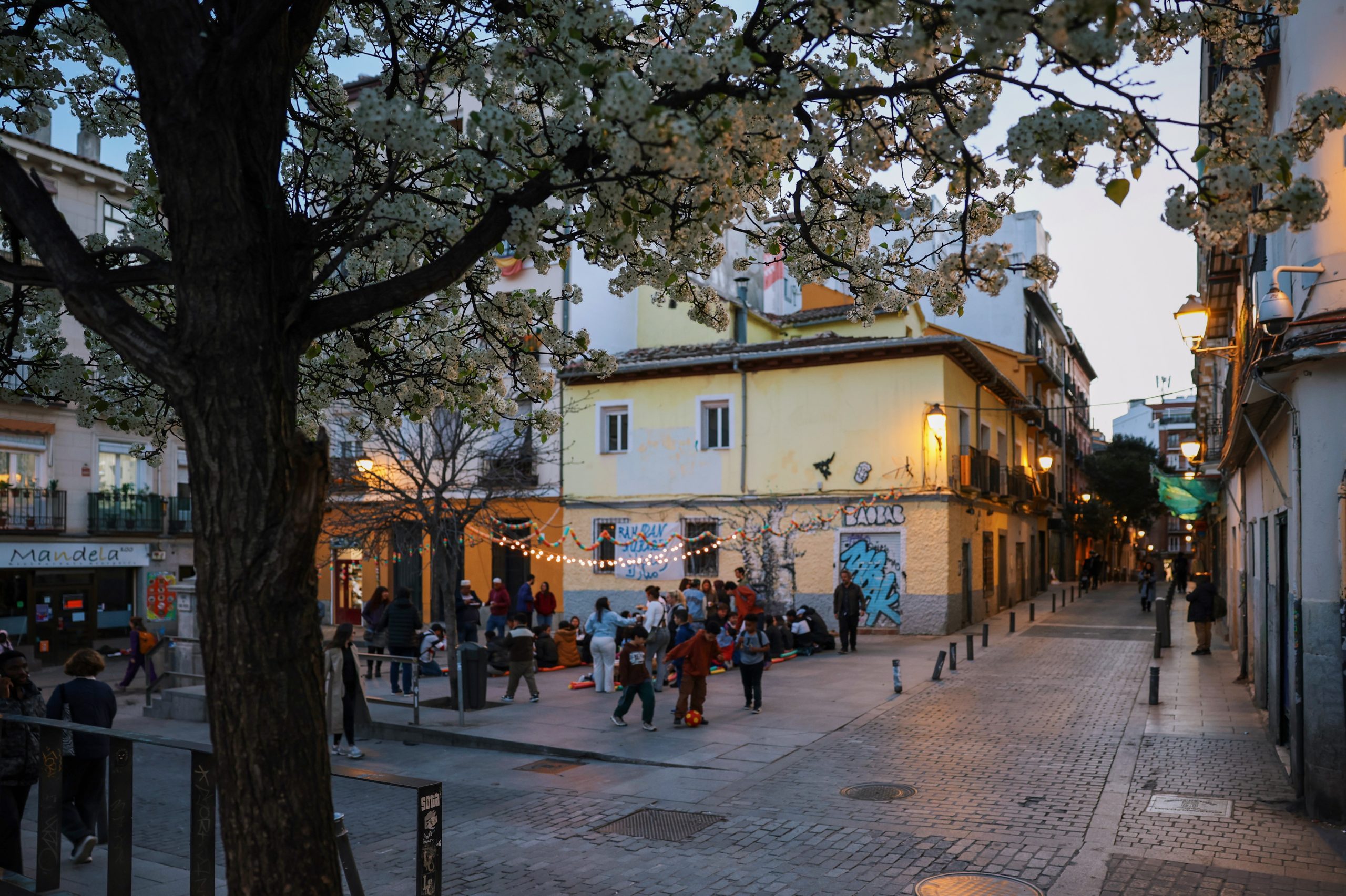
Until January 2020, the terrace of Baobab, the first Senegalese restaurant in Madrid, spilled light and life across Plaza Nelson Mandela. People ate around the historic fountain while kids drifted between tables and benches. People on the other side of the square would stop for a chat, or simply people watch. It never felt unsafe.
Since Baobab’s closure, that sense of gravity on the square has disappeared and been replaced by surveillance, with police cars almost always parked at the top of the plaza. Two of the square’s four sides are now effectively dead spaces, and along the northern edge an entire block, once the grassroots social centre La Quimera, sits abandoned. Only one business still opens onto the plaza – Mandela 100 – and even that is not allowed a terrace.
Despite the steady flow of cars and pedestrians cutting through the square, there is little reason to stop, to look around, or to engage. What was once a destination where you could spend hours of fun with friends, family and neighbours has become a transient corridor where cars and people no longer stop – and this is not an isolated case.
Across Lavapiés, small pockets of inactivity are spreading as commercial premises are converted into ground-floor flats or tourist rentals, and buildings are held intentionally empty in anticipation of more profitable futures (speculation). The former home of Baobab was nearly lost to that logic: a 288-bed budget capsule hotel was planned in its place until neighbours organised and blocked the demolition and development. The building will now be protected as it’s one of the few historic structures left in the neighbourhood, but protection alone does not bring back what has been lost, nor is this what the neighbours want.
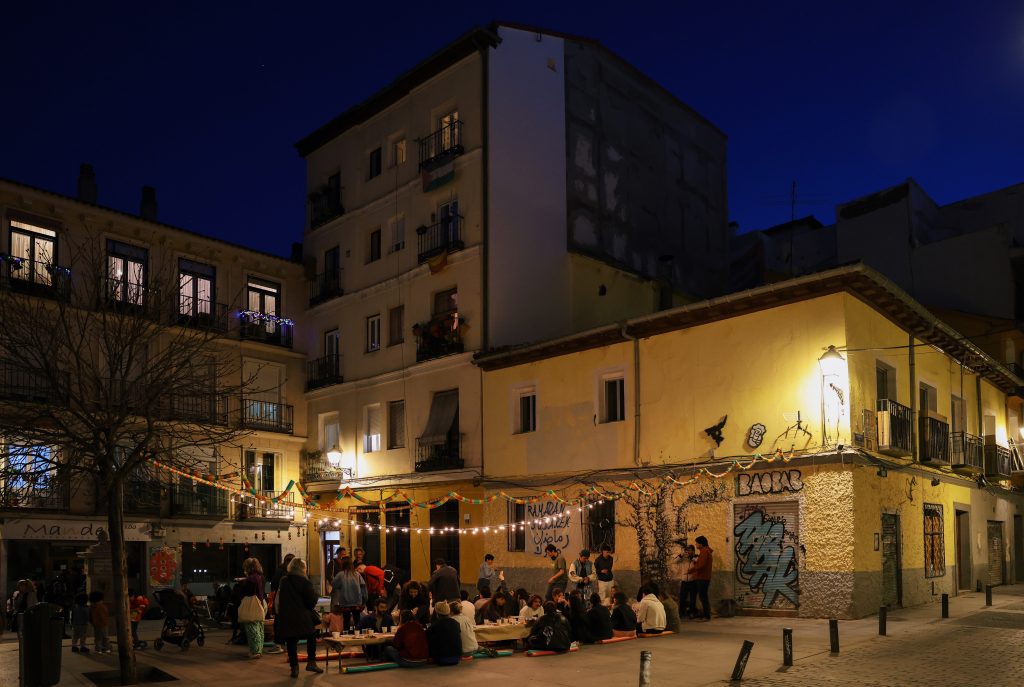
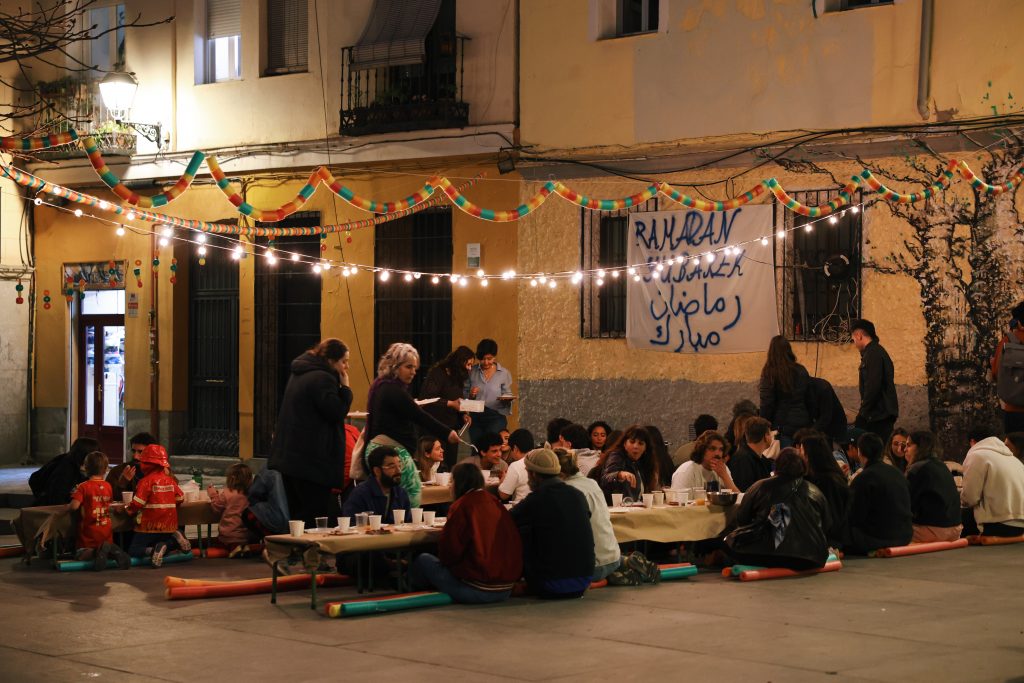
Alberto, part of the creative duo Paco Graco, worked with his architecture students to stage a temporary intervention in the square in an experiment to reclaim public space for the people of Lavapiés.
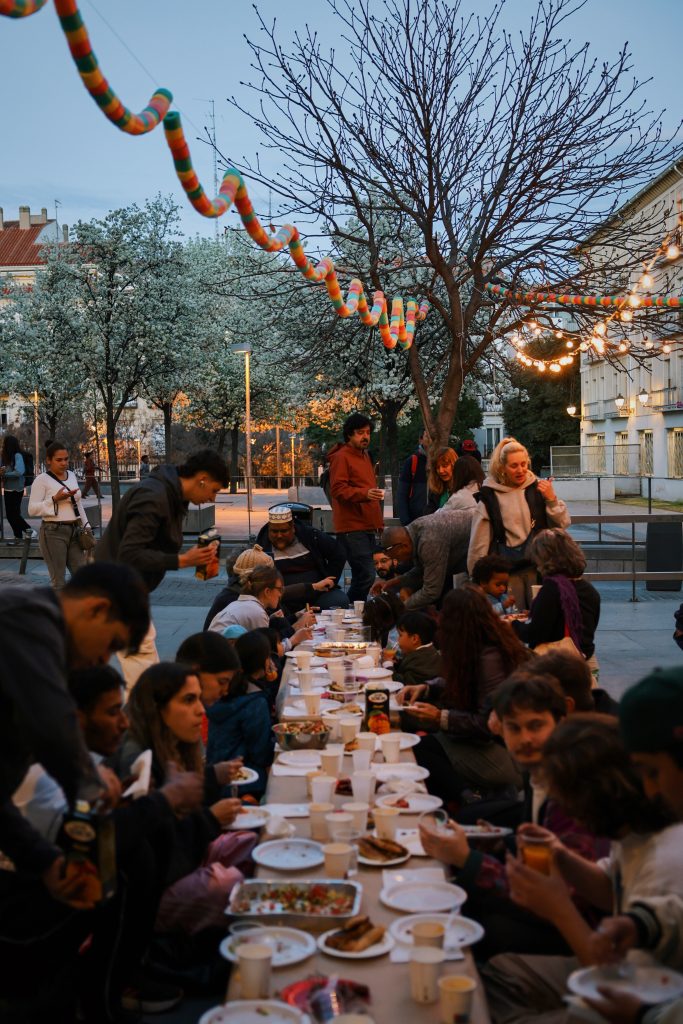
For one evening, the transformation was magical. Home-cooked dishes brought by students, neighbours and local mosques was placed on two rows of school chairs and benches, standing in for the Baobab terrace that no longer exists. Fairy lights were strung up between the pink blossoming tree and the Baobab building itself. What followed was nostalgia playing out in current time: people stayed and talked, we recognised each other and made new contacts. For a few hours, the square was remembered for what it is for.
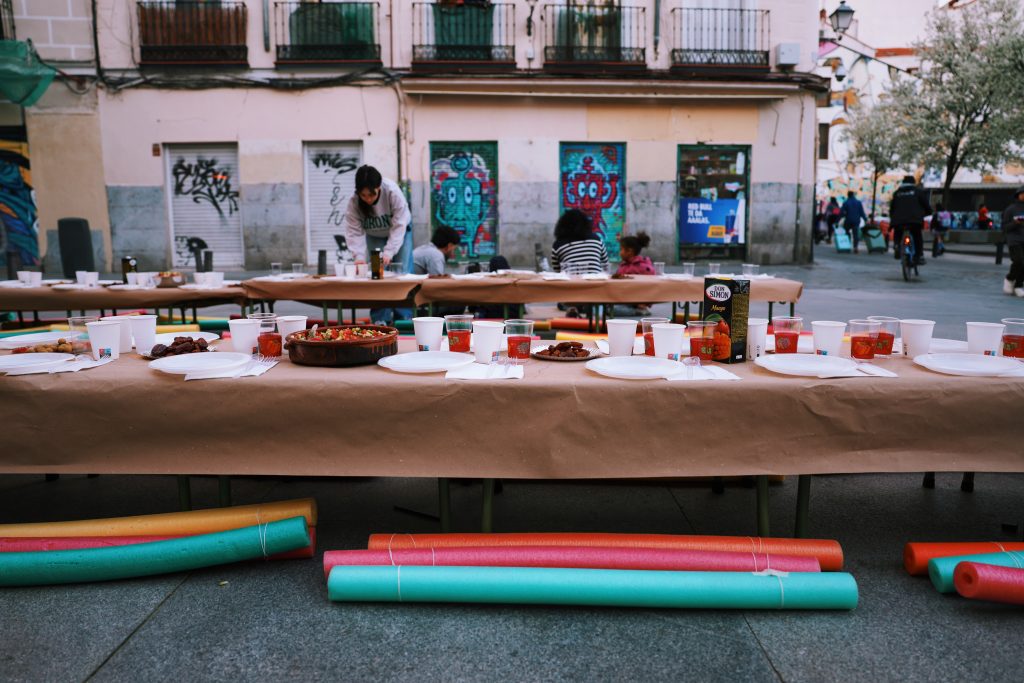
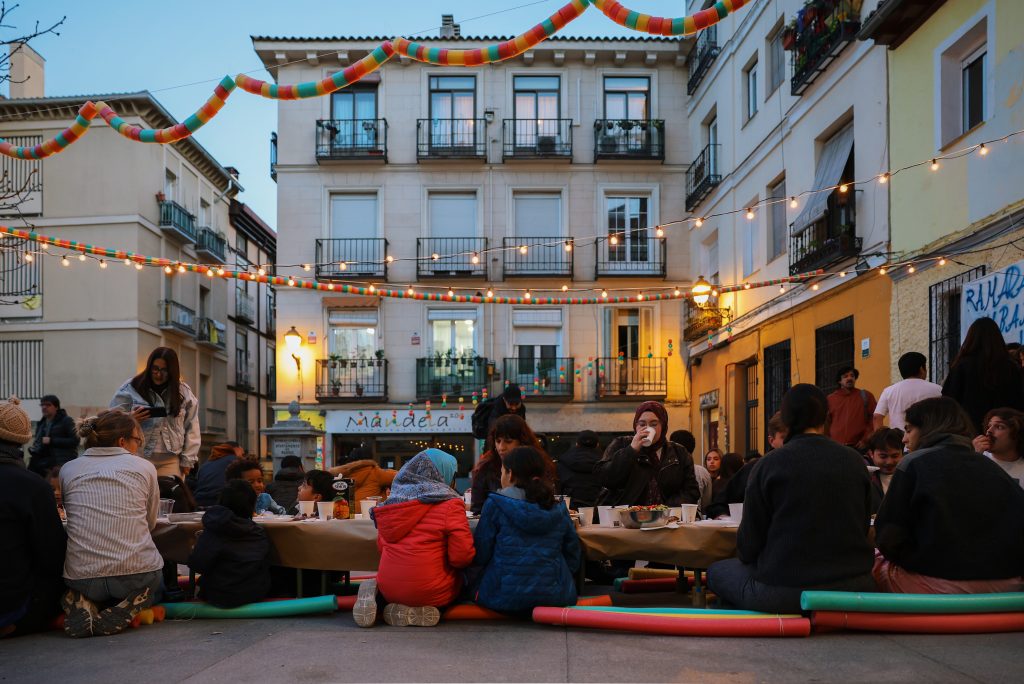
It didn’t last long, but the point has been made. Reviving spaces like Plaza Nelson Mandela is not just a question of infrastructure or investment, but of use. The fact that this no longer happens begins to look like a deliberate choice by the Madrid City Council – that the emptiness and abandonment we feel are part of a strategy to render the square a hostile environment, one that then supposedly requires urgent intervention through increased police presence or the construction of a capsule hotel.
Plaza Nelson Mandela doesn’t need what has been offered over the past six years. Last night’s children’s Iftar was a perfect example of what the community actually wants – and could have – if left up to those who live here.
SUPPORT THIS PLATFORM FROM €1 PER MONTH
You may have noticed that I don’t run ads, nor accept sponsors or investors. Independence is everything and what I decide to publish will not be influenced by those in a position of capital, privilege or power. Therefore, I invite only you to support this platform and only you to help me keep doing what I do. Thank you, Leah.
Support MNF for as little as €1 per month, which you can cancel at any time.

Leave a Comment