

Author: Aidan Levin
About a 10 minute walk from the Estrecho Metro stop in the Tetuán District of Madrid is Energy Control’s Madrid office and lab. A non-profit that spans all of Spain, Energy Control started in 1997 as part of a Spanish public health initiative, with the aim to monitor the purity of illegal drugs in an unregulated market. Free of charge, people can anonymously submit small samples of their desired substance to make sure they will be getting the experience they paid for – with reduced risk.
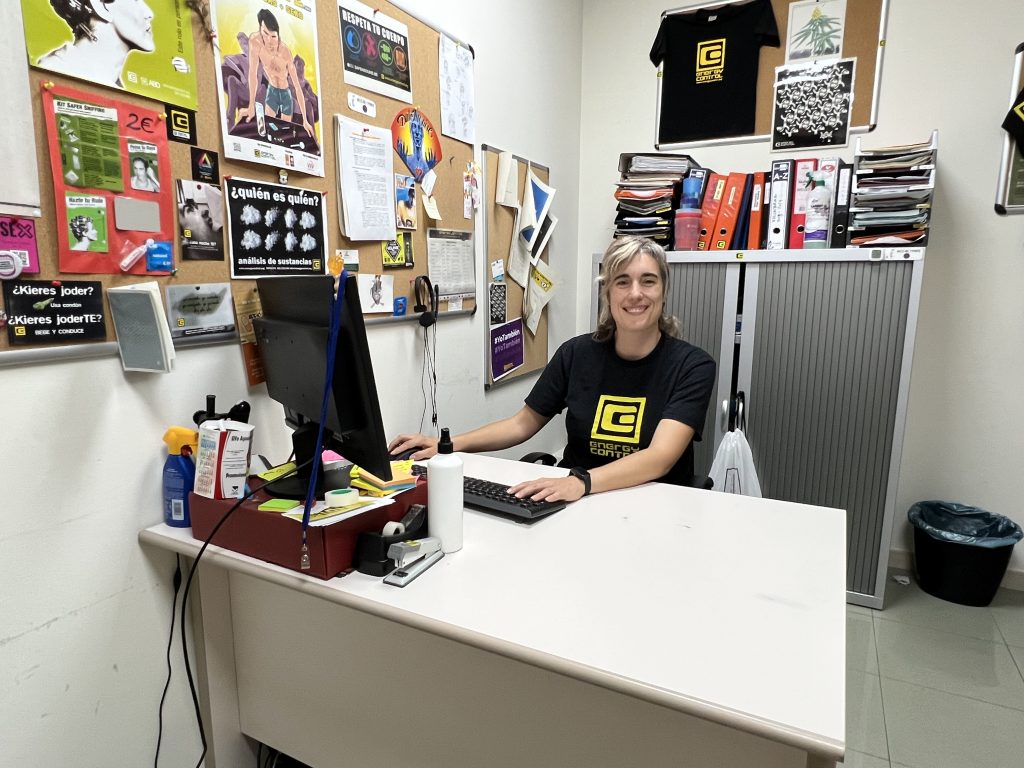
On the walls of their basement office are quirky drug posters: an MDMA tablet with a fork to the left and a knife, a comic strip about peer pressure and a placard equating curling your own hair to testing your own drugs. “I knew about Energy Control because of my best friend,” says Berta de la Vega, the program coordinator for Energy Control’s Madrid branch. At the same time that figures of authority were telling her that drugs were bad, she would watch her friends indulging in weed, cocaine or speed in the nightclubs.
While public possession of illegal drugs in Spain can result in a fine, use in small quantities within a private space is tolerated, with no penalty for possession. This law allows Energy Control to exist, and chemically analyze illicit drugs such as MDMA, cocaine, ketamine and LSD.
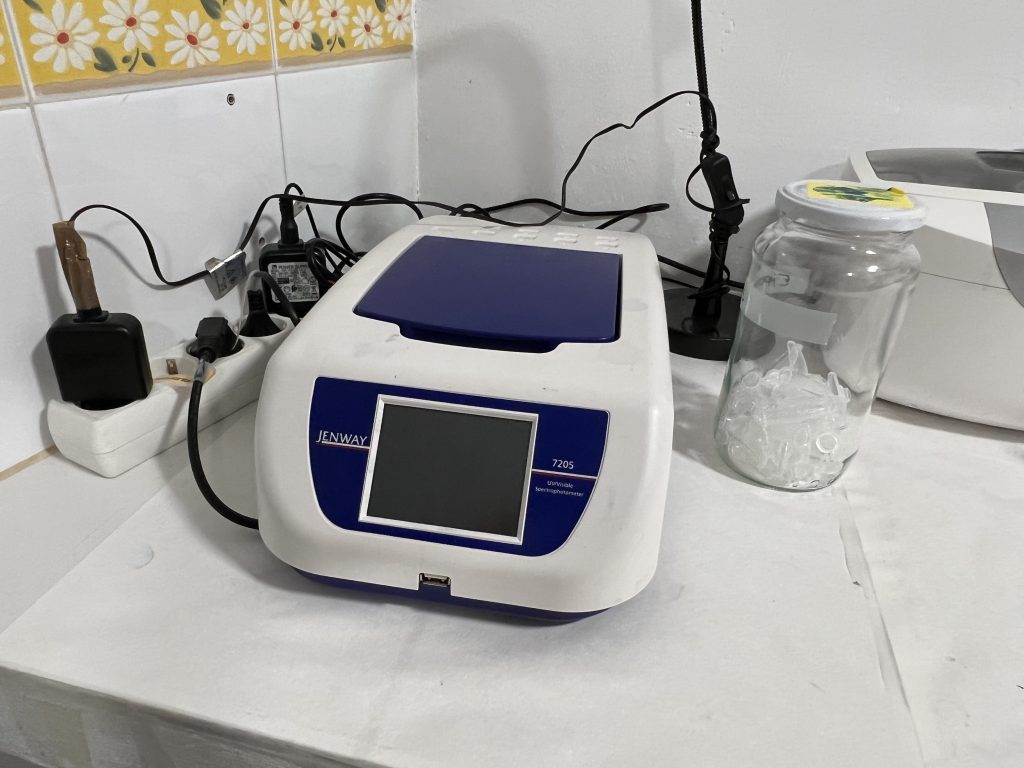
Berta leads the way out of the office, down the hall, and to another room. On the far end sits the lab equipment: a thin-layer chromatograph and an ultraviolet (UV) spectrophotometer. Both are quantitative techniques for testing drug samples, which means that they are able to detect each compound present in a substance.
Thin-layer chromatography is relatively cheap and accessible. It works by dropping a small amount of substance onto a porous material, then watching the multiple substances separate out. The known patterns of different substances is what allows one to determine the impurity or purity of a substance. Another quick drug testing method, done in just 20 minutes, involves placing the sample inside a UV spectrophotometer, which uses UV light to detect unexpected substances.
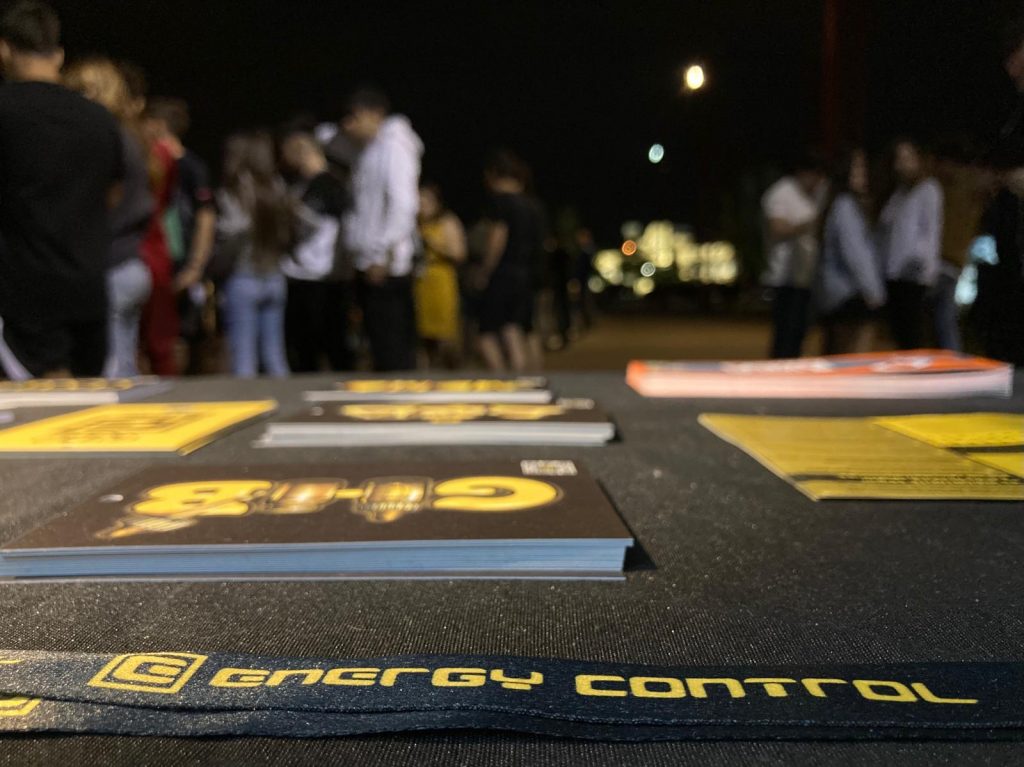
As this equipment is light and easy to travel with, Energy Control brings them to music festivals, setting up sampling tents as often as they can. “We are doing more or less 14 festivals per year, not too much,” says Berta. Energy Control analyzes around 1,762 samples per year on a nation-wide level. They also post alerts on their website for substances being sold that may contain adulterants, using evidence from recent tests. They also have an index of all the MDMA and 2C-B tablets that they have encountered in the lab, as a reference for people who may run into them on the street.
Part of Energy Control’s work is education. Each year, the team gives lectures to the psychopharmacology master students at the Computense de Madrid, as well as partnering with Computense de Madrid professors on scholarly articles. Energy Control has also spoken at the European University in Madrid. This outreach work is critical for them as drug-taking among people as young as 15 could still be high.
According to the European School Survey Project on Alcohol and Other Drugs (ESPAD), in 2024, on average, one in eight school students aged 15-16 years (14%) reported having used an illicit drug at least once in their life. Data show a continued decline in illicit drug use in this group, with lifetime prevalence dropping from 19 % in 2015 to 14 % in 2024.
On average, around 3% of students reported having used pharmaceuticals and new psychoactive substances (NPS) in their lifetime, representing higher levels of use than for amphetamine (1.8%), MDMA (2.1%), cocaine (2.3%) or LSD/hallucinogens (1.8%) taken individually.
Berta sighs, explaining that the Comunidad de Madrid government has now stopped funding Energy Control. But there are other chapters of Energy Control in Barcelona, Palma and Malaga, who have not had their funding cut from their respective autonomous governments. Fortunately there are many more organizations across the country doing this type of work, for example, Consumo Conciencia in Zaragoza, Nectar Spectra Labs Catalonia, Ailaket Elkartea!! in the Basque Country and Consumo Cuidado in Ibiza.
“That puts people who use drugs in a vulnerable position because if you use drugs and have a problem, you generally won’t talk about it,” says Berta. “You might tell a friend, but your friend isn’t professionally trained, and you won’t tell your university or your parents because of the fear of a punitive response.”
Alejandro Pérez, the Assistant Director for Student Life and Housing at NYU Madrid for seven to eight years, has seen many college students involved with drugs, which seems heightened during their semester abroad. “There is a lack of restraint that comes with you being constrained for so long in one space,” says Alejandro, explaining that the American “work hard play hard” attitude toward life is exacerbated during study abroad.
At the start of each semester, Alejandro and his colleagues give a talk to the students on how to navigate their study abroad experience. They bring up partying, drugs and alcohol, yet there is a certain disconnect that Alejandro picks up on each time he leads this introductory talk for the semester, that students seem to think that he doesn’t understand their situation. Open conversations about drug use are hard to come by and stigmatized, explains Alejandro, and believes that as an administration, they can do better to meet students at their level.
But Berta is more optimistic about the future for young people: “A more conscious society where people make their own choices and which aren’t held against them, including taking drugs, can be a personal choice.”
SUPPORT THIS PLATFORM FROM €1 PER MONTH
You may have noticed that I don’t run ads, nor accept sponsors or investors. Independence is everything and what I decide to publish will not be influenced by those in a position of capital, privilege or power. Therefore, I invite only you to support this platform and only you to help me keep doing what I do. Thank you, Leah.
Support MNF for as little as €1 per month, which you can cancel at any time.


Leave a Comment