
Author: Leah Pattem / Photos: David Canales
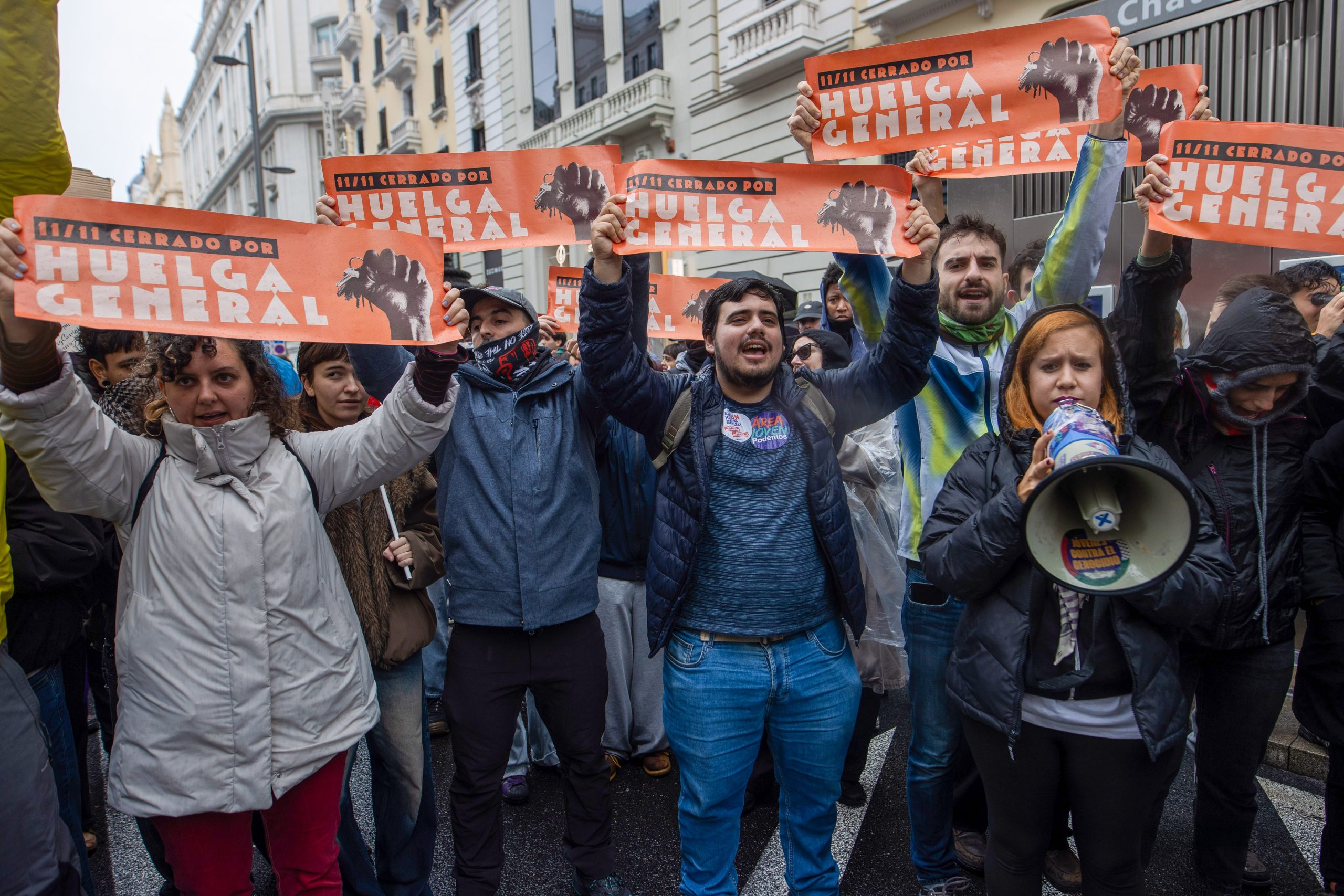
Spain called its first general strike in 14 years, with around four million of people joining a nationwide 24-hour stoppage to demand action over the escalating cost of housing and the wider cost-of-living crisis. Mostly peaceful pickets were established across the country on Wednesday, as the mobilisation gathered momentum ahead of elections at the end of this month.
The reason the strike was called was because having a decent salary can no longer guarantee us a place to live. And by withdrawing Spain’s labourforce for a day, ordinary people could demonstrate just how much the economy depends on us, bringing production and services to a halt while making the housing crisis impossible for the current government and potential future government parties to ignore.
Trade unions reported particularly strong participation in the transport and waste collection sector. The impact was also felt in education, with numerous schools and universities closing their doors or operating with significantly reduced staffing. In Madrid, Wednesday’s mobilisation coincided with an ongoing teachers’ strike that has been running for almost a month, as teachers and school staff continue to demand improvements to their working conditions, and basic necesseties such as air conditioning in schools.
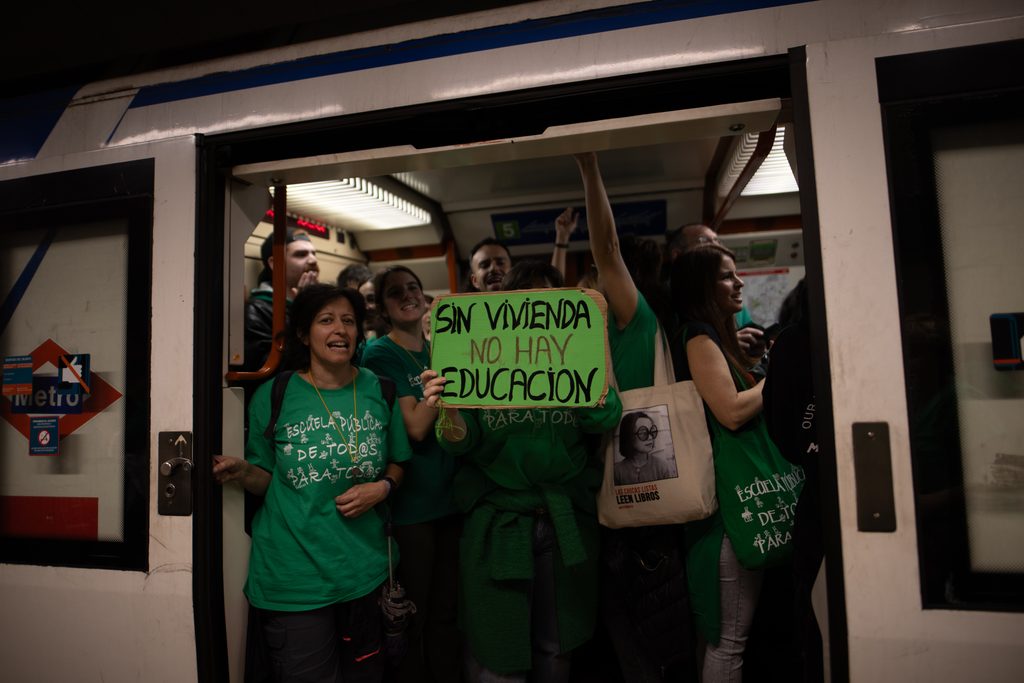
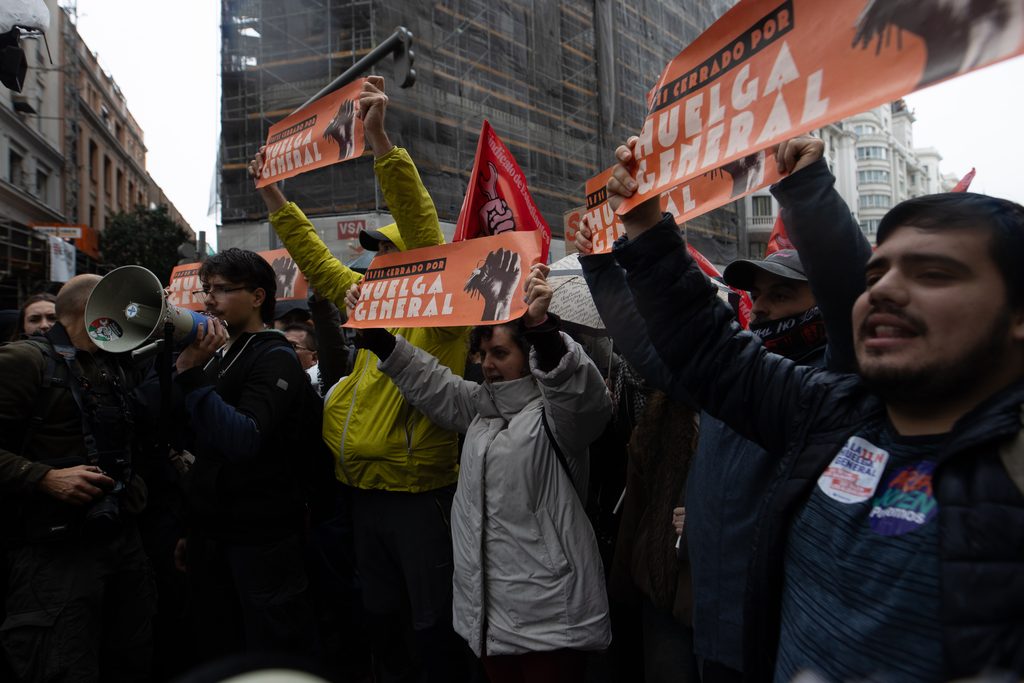
By the evening, the industrial action had spilled onto the streets, with enormous demonstrations taking place in cities across Spain. In Madrid, thousands of people marched along the capital’s main commercial thoroughfare despite relentless rain. Most people’s experience of the General Strike protest was emotional, historic and overwhelmingly positive. For a few hours, we were successfuly pushing back against a historic injustice – the reality that even a decent salary can no longer guarantee us a place to live. But as the protest came to an end, events unfolded that marked a level of police violence few of us have ever witnessed in Spain.
Between Callao and Plaza de España, police reportedly charged at protesters, in an escalation of violence that appeared entirely disproportionate to the situation. They then deployed several canisters of tear gas and pepper-sprayed multiple people, including a completely non-aggressive homeless man (next slide). Photographic and video evidence of these incidents is now circulating widely.
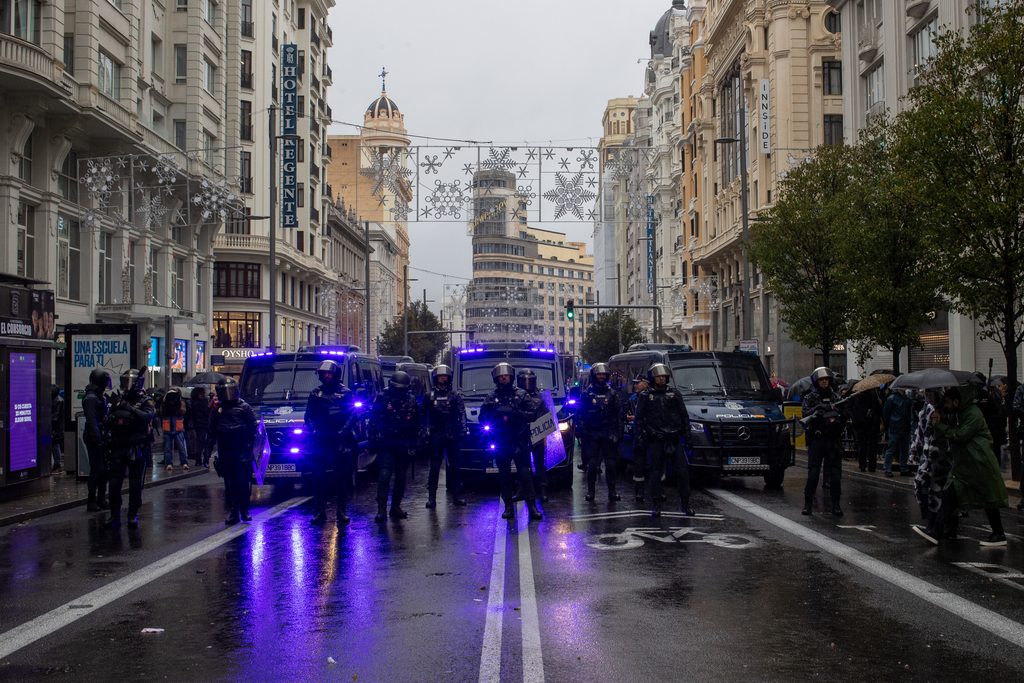
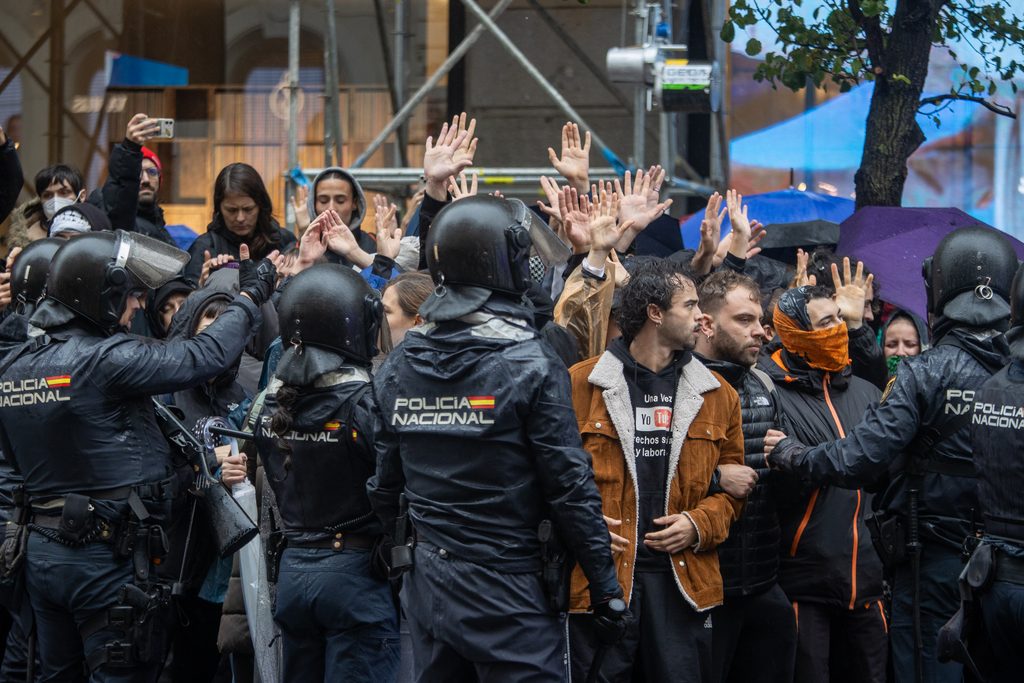
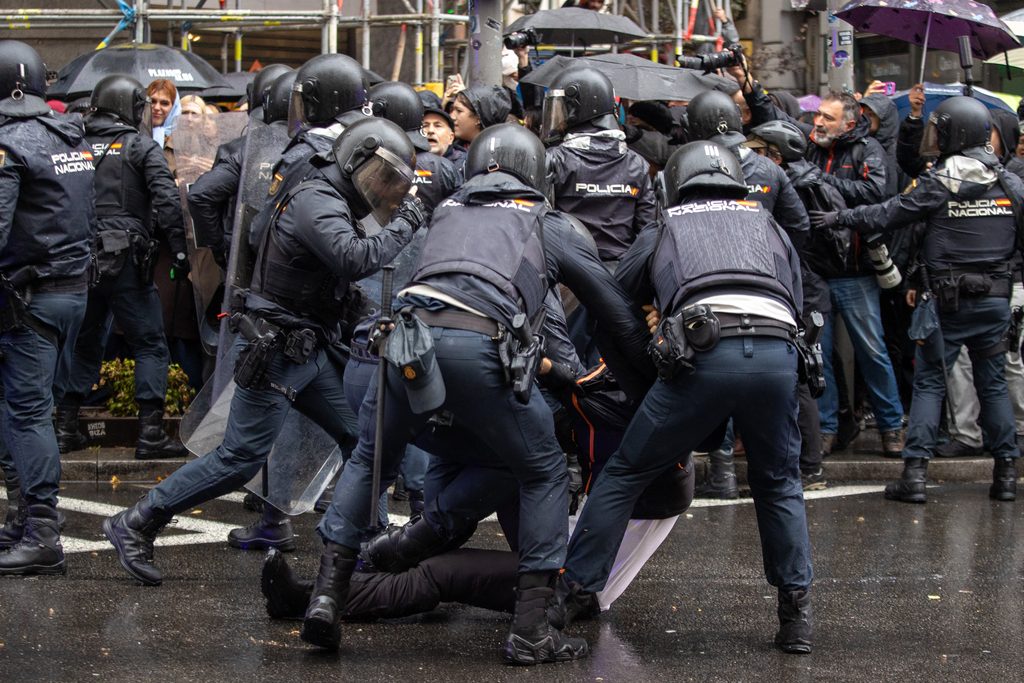
Interior Minister Fernando Grande-Marlaska, who oversees Spain’s national police, has announced an internal investigation and ordered that tear gas should no longer be used in policing demonstrations. Against a backdrop of growing police violence across Europe, the decision to prohibit the future use of tear gas at demonstrations is a significant victory in Spain. But we should not underestimate the potential for police violence to escalate in here, as it is doing elsewhere across the continent.
Over the past few weeks, I’ve been in Portugal and Albania covering the cost-of-living protests, where I have witnessed levels of police violence that I had never seen in my life. And what worries me most is how easily this violence can become normalised. Even I feel less impacted by the escalating police violence that I’m seeing. Maybe it’s a type of survival, that what is initially shocking gradually becomes accepted, then expected, and eventually escalates further.
But we must not allow that to happen. Not in Spain, not anywhere in Europe, or the world. And certainly not against people peacefully demanding something as fundamental as the right to a home.
SUPPORT THIS PLATFORM
You may have noticed that I don’t run ads, nor accept sponsors or investors. Independence is everything and what I decide to publish will not be influenced by those in a position of capital, privilege or power. Therefore, I invite only you to support this platform and only you to help us keep doing what we do. Support MNF for as little as €1 per month, which you can cancel at any time.
Leave a Comment