
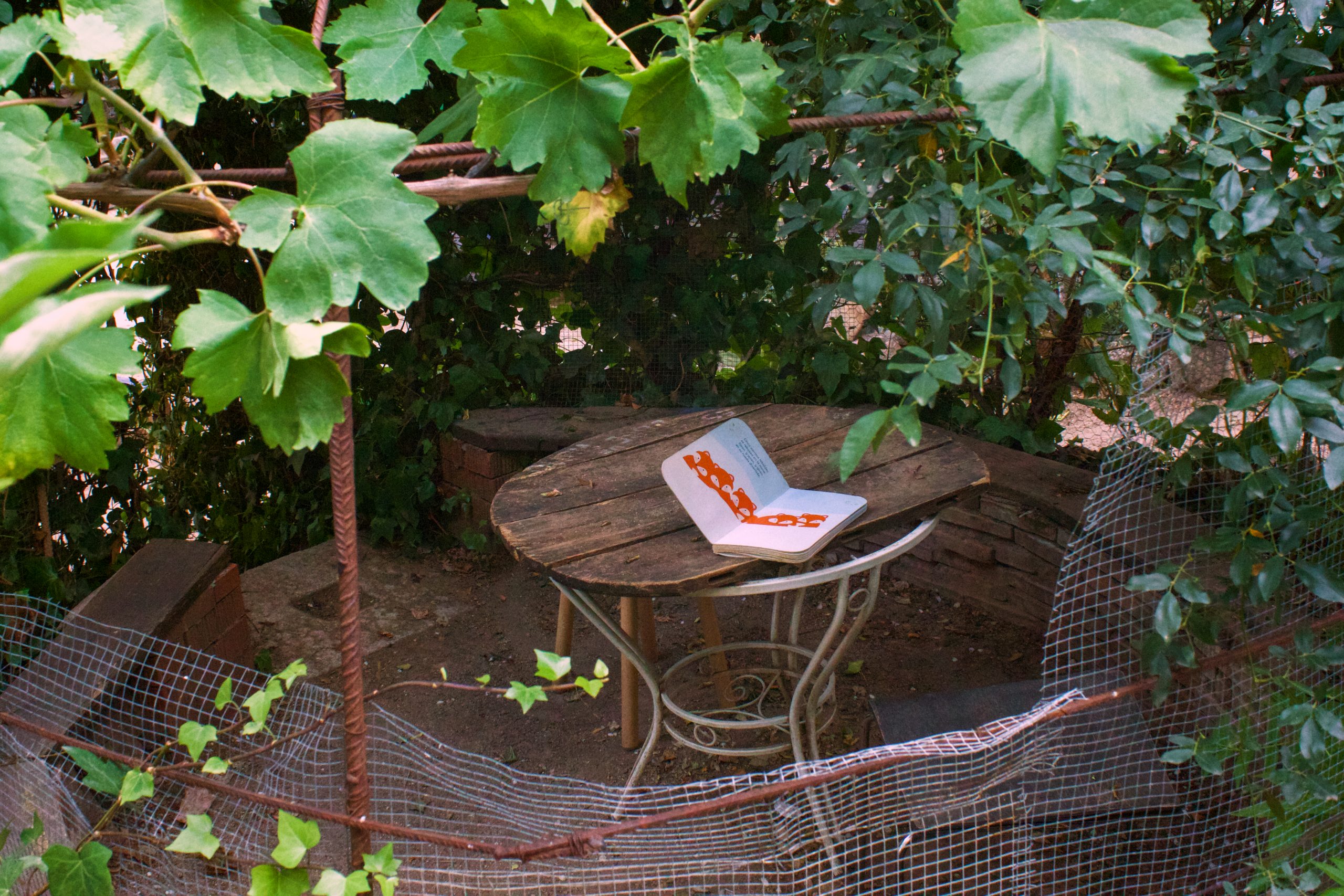
Author: Roxy Pérez Manrique / Photography: Anastasia Conley
Leer el artículo en castellano
I first visited the Lavapiés urban garden Esta Es Una Plaza as a primary school teacher, as I’d been looking for a place where my students could experience community life beyond the classroom. Hidden behind an unassuming metal gate on Calle Doctor Fourquet 24, the self-managed garden became a living lesson. My students planted seeds that would grow into vegetables, observed insects and raked up fallen leaves. They played with neighbors of different generations, and discovered that learning could happen through caring for a shared place.
I kept returning, eventually attending monthly assemblies and maintenance days with my daughter. As a mother of a young child growing up in one of Madrid’s hottest and most densely built neighborhoods, I felt reassured by the shade of the trees, the smells of the herbs and spices, and a safe place where she could play freely away from traffic.
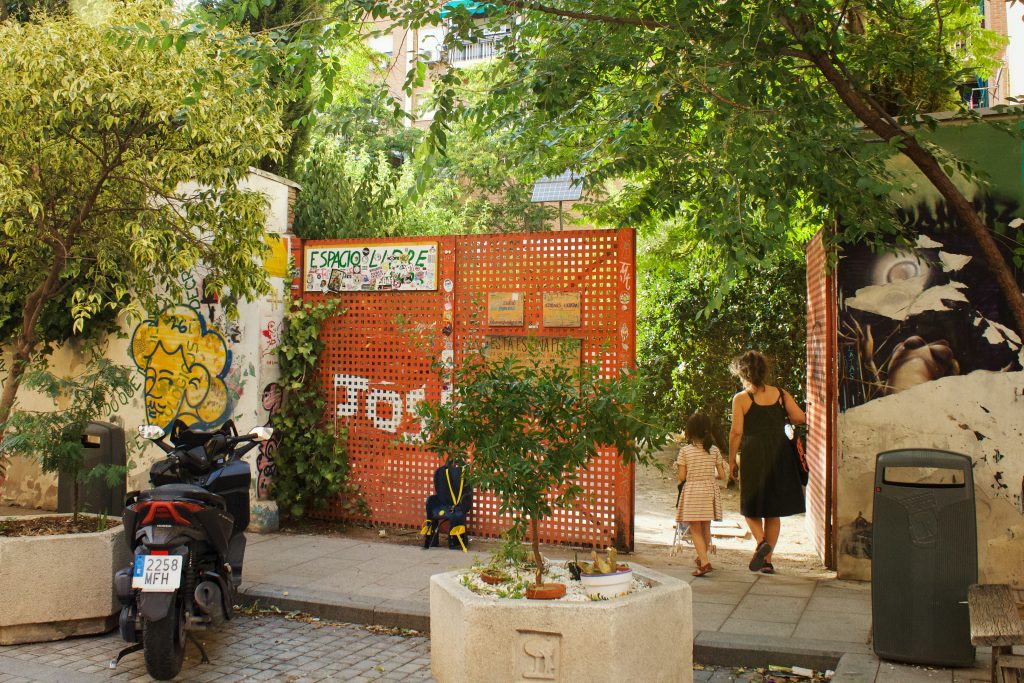
But the cool canopy that drew us there each summer did not happen by accident, nor was it the result of a climate adaptation strategy or a municipal project, it had emerged through nearly two decades of neighbors caring for a vacant lot together. That is what makes Esta Es Una Plaza (EEUP) so remarkable. Its name, This Is a Square, is a declaration that a neglected plot could become a public space through collective action.
In 2008, after a workshop on transforming vacant spaces led by La Casa Encendida came to an end, residents reclaimed the abandoned site instead of allowing it to fall back into neglect. They built garden beds and planted trees, and created a collectively managed commons. What began as an experiment in neighborhood organising evolved into one of Madrid’s longest-running community gardens. Today, people harvest seasonal vegetables, repair bicycles, exchange clothes, put on cinema nights, and simply spend time together without spending any money.
But as the trees matured, residents noticed something unexpected: the garden remained noticeably cooler than the surrounding streets. Without intending to, they had created one of Lavapiés’ most effective informal climate refuges, where children play while older neighbors rest in the shade.
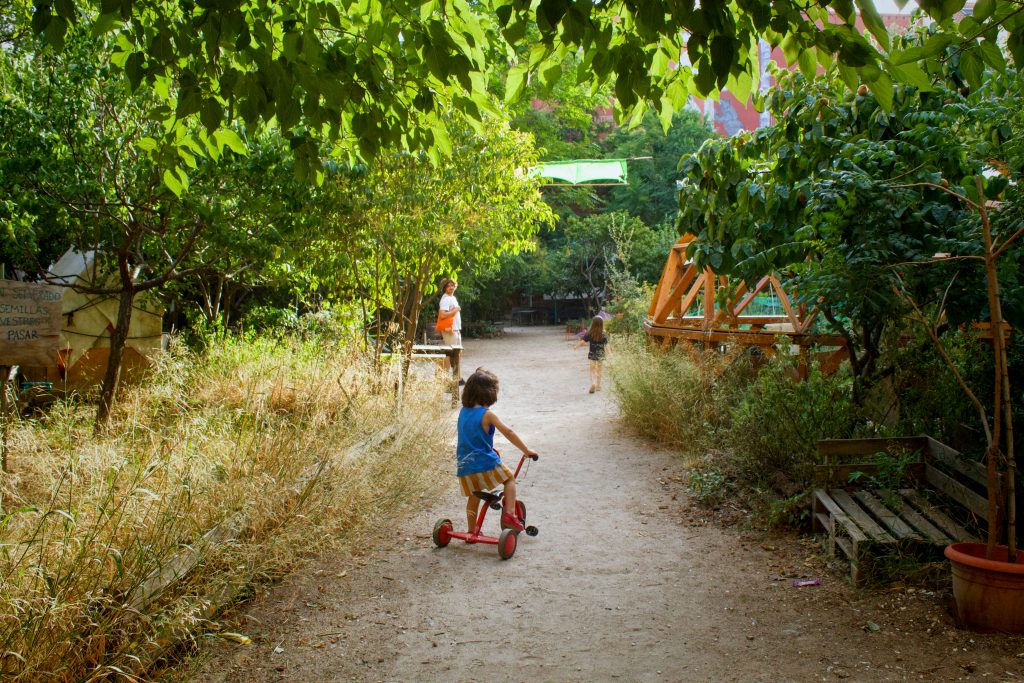
The value of spaces like EEUP is reflected in the increasingly influential 3-30-300 urban forestry guideline, which recommends that everyone should be able to see at least three trees from their home, live in neighborhoods with at least 30 percent tree canopy, and be within 300 meters of a quality green space. In dense neighborhoods like Lavapiés, where these conditions are far from guaranteed, community-managed gardens help bridge that gap, making the city cooler, healthier, and more heat-resistant.
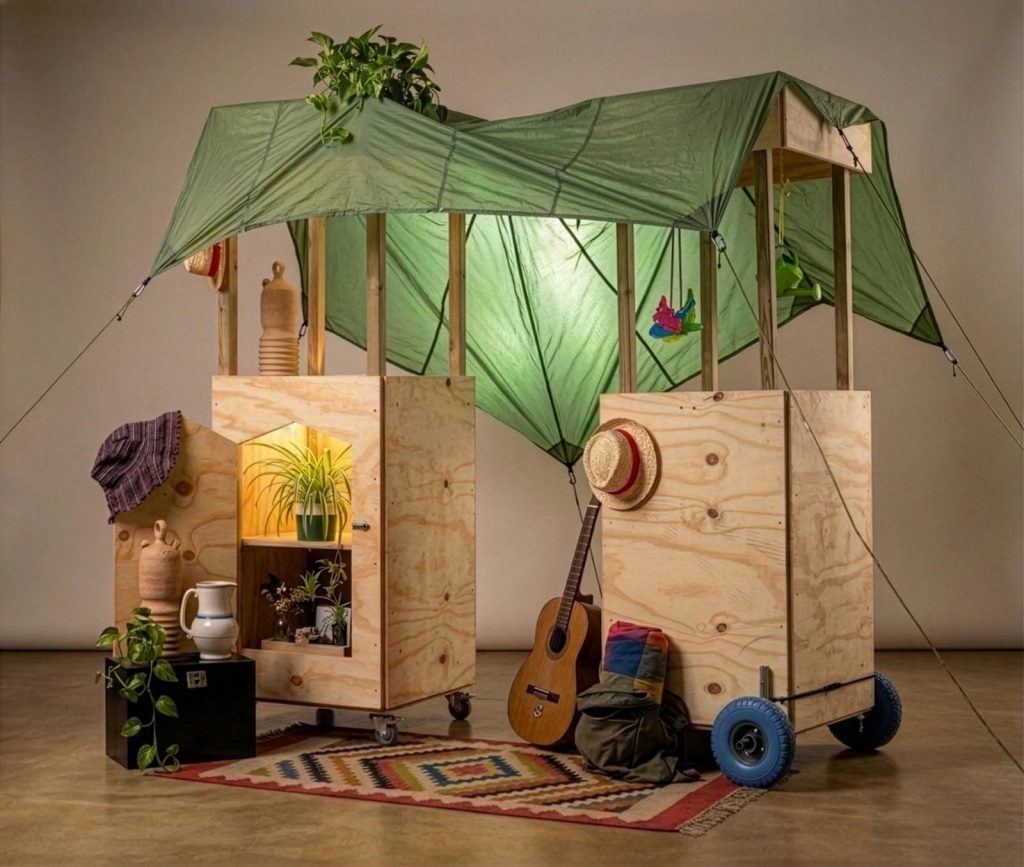
Last summer, EEUP joined other Lavapiés collectives through the Asamblea del Museo Situado to collaborate with Museo Tentacular at the Museo Reina Sofía on a pilot community climate refuge inside the museum’s patio. One result of that collaboration was El Cachivache, a citizens’ lab organized by Grigri Projects at Infinito Delicias. The prototype was conceived by members of EEUP and Maestras del Barrio, who worked alongside architects, carpenters, educators, neighbors, and students. Together they created a portable climate refuge designed to bring shade, and promote rest and community care to overheated streets, schoolyards and plazas.
Heat is the deadliest weather-related hazard, far surpassing floods, storms and other extreme weather events, according to WHO. Between 2000 and 2019, an estimated 489,000 people died annually from heat-related causes. Around 36% of those deaths occurred in Europe, which has become a global hotspot for heat deaths. In the summer of 2022 alone, an estimated 61,672 excess deaths in Europe were linked to extreme heat. Older people’s risk has soared, with heat-related mortality among people aged 65 and over increasing by approximately 85% in the last two decades.
Extreme heat doesn’t just affect physical health, it is also related to mental health conditions, dementia and insomnia. Tropical nights caused by the Urban Heat Island Effect – where heat absorbed in manmade materials during the day releases heat at night – are particularly dangerous, especially when temperatures don’t decrease for weeks at a time. This cumulative heat stress means the body cannot recover, increasing the risk of illness and death. But most heat-related deaths are preventable, and urban greening is a key player in saving lives.
Green spaces cool neighbourhoods, clean the air, absorb rainwater, and make dense cities more liveable, but they also create places where people stay long enough to get to know one another, forging civic leadership. Under the shade of trees, children play while parents talk, older neighbours gather to escape the afternoon heat, volunteers tend gardens together, and passersby stop to rest. These everyday encounters build trust and power. During a heat wave, that trust can mean checking on an older resident, sharing water with someone in need, opening a cool place to rest, or making sure everyone has the knowledge they need to avoid overheating.
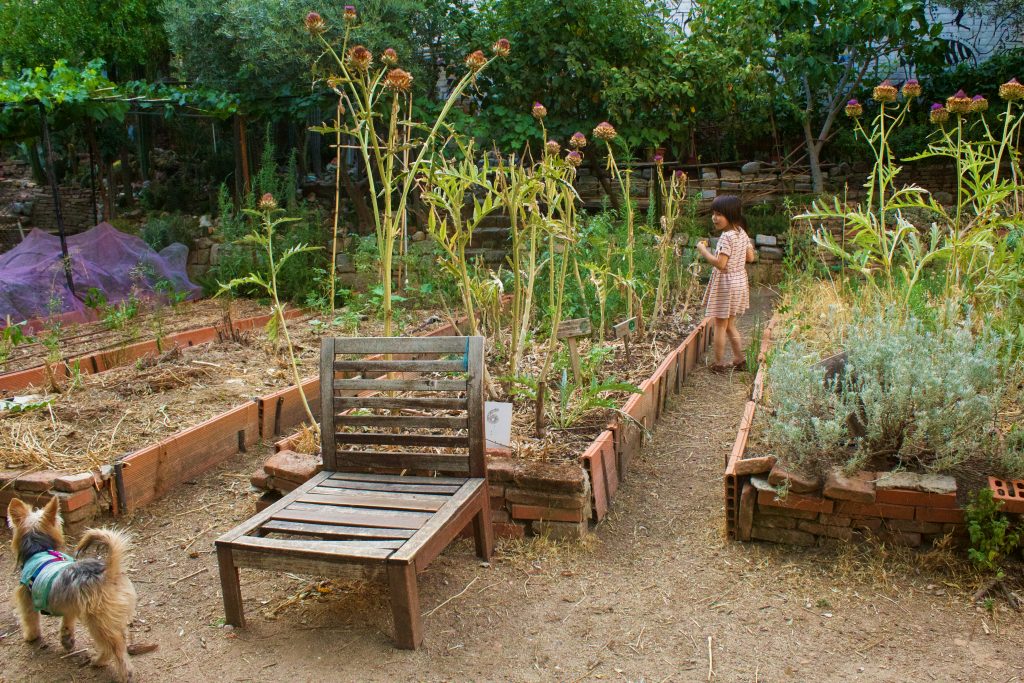
Esta Es Una Plaza reminds us that climate resilience does not always begin with multimillion-euro infrastructure projects funded by a government institution. Often, it begins by reclaiming an abandoned lot, planting trees whose shade thickens over time, and creating places where neighbours get to know one another well enough to look out for each other. Many neighbourhoods already possess the essential ingredients: underused land, committed residents, and local organisations willing to create structures around caring for shared spaces. Yet projects like this urban garden also reveal the fragility of community-led climate solutions.
The garden exists through a cesión de uso (right-to-use agreement) with Madrid City Council, meaning its future ultimately depends on the renewal of that permission. After nearly two decades of generating environmental, educational, and social benefits, its long-term continuity is still not guaranteed. If cities are serious about climate adaptation, public institutions must do more than celebrate these initiatives; they must provide the long-term security, investment, better access to water, and legal certainty that allow them to endure.
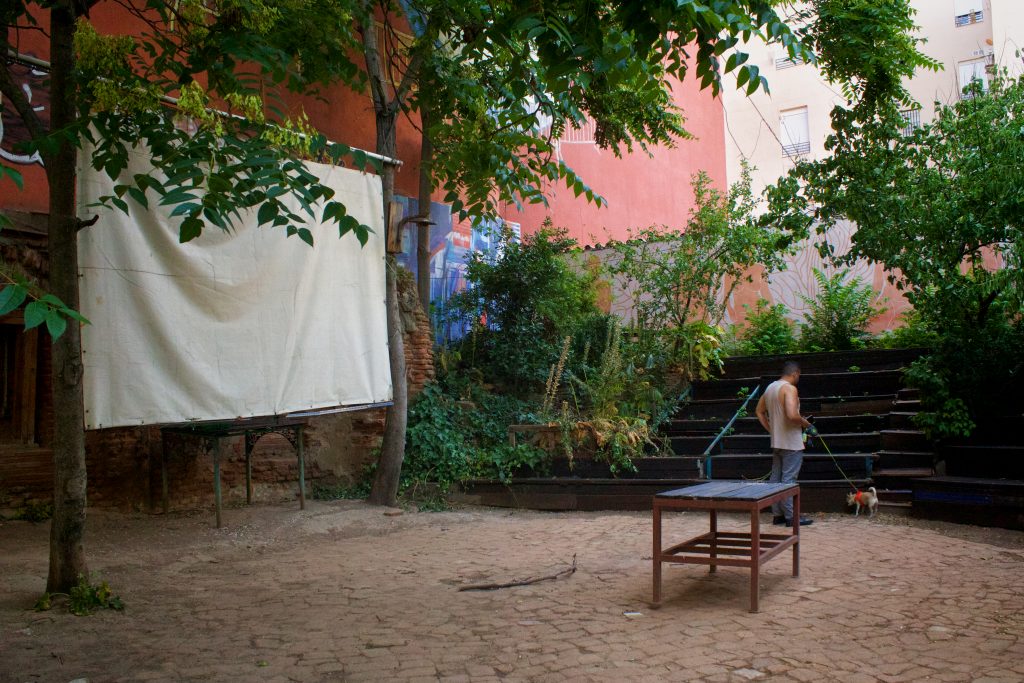
Whether through a self-managed garden or a portable prototype like El Cachivache, the principle is the same: climate adaptation begins with people. But if we are expected to care for the spaces that make cities more resilient, those spaces must also be protected. In a hotter future, cities will need not only cooler streets, but also the long-term commitment to preserve the places where neighbours gather, build trust, and create the resilience that no piece of infrastructure can provide on its own. This square is the future of Madrid, and should be given such recognition.
SUPPORT THIS PLATFORM
You may have noticed that I don’t run ads, nor accept sponsors or investors. Independence is everything and what I decide to publish will not be influenced by those in a position of capital, privilege or power. Therefore, I invite only you to support this platform and only you to help us keep doing what we do. Support MNF for as little as €1 per month, which you can cancel at any time.
Leave a Comment