
Author & photography: Leah Pattem
Leer el artículo en castellano
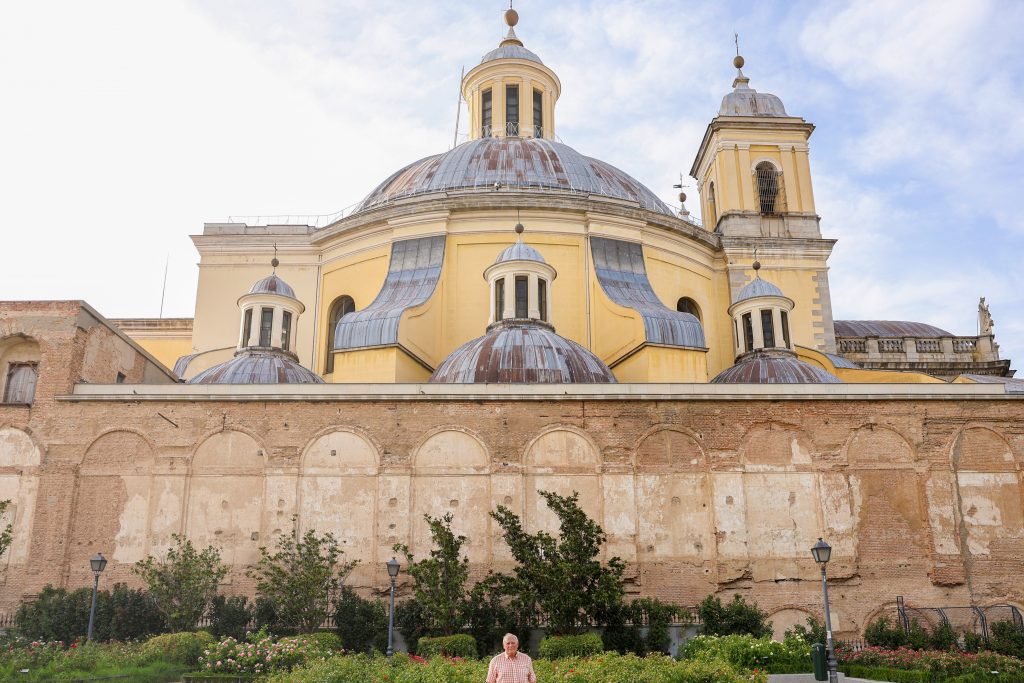
There’s a brief respite between heatwaves, and the pine trees are rattling with cicadas a little less today. Alejandro Ibáñez, 81, meets me outside his apartment block and signs me in as a guest. We’re in a slightly cooler part of La Latina in central Madrid, near the Parque de la Cornisa and next door to the gigantic stone Basilica of San Francisco el Grande. It’s one of the most emblematic corners of Madrid, with ornate religious buildings, ancient cobbled streets and trees that seem to flower all year round. He loves it here.
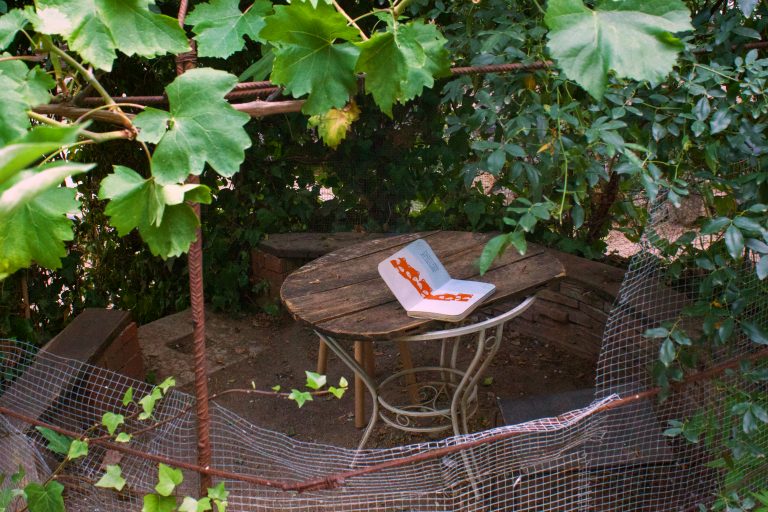
We walk through the grounds of the residence, which backs onto the exposed brick wall of the basilica. A large monastery-esque allotment produces an abundance of fruits and vegetables, though it’s grown a little wild in recent months. We take the lift up to the third floor and walk along an eerily silent corridor. At the far end, Alejandro’s front door is open. “No one else lives here,” he says, lifting his shoulders and holding the palms of his hands to the sky. “It’s not like anyone is going to just walk in.”
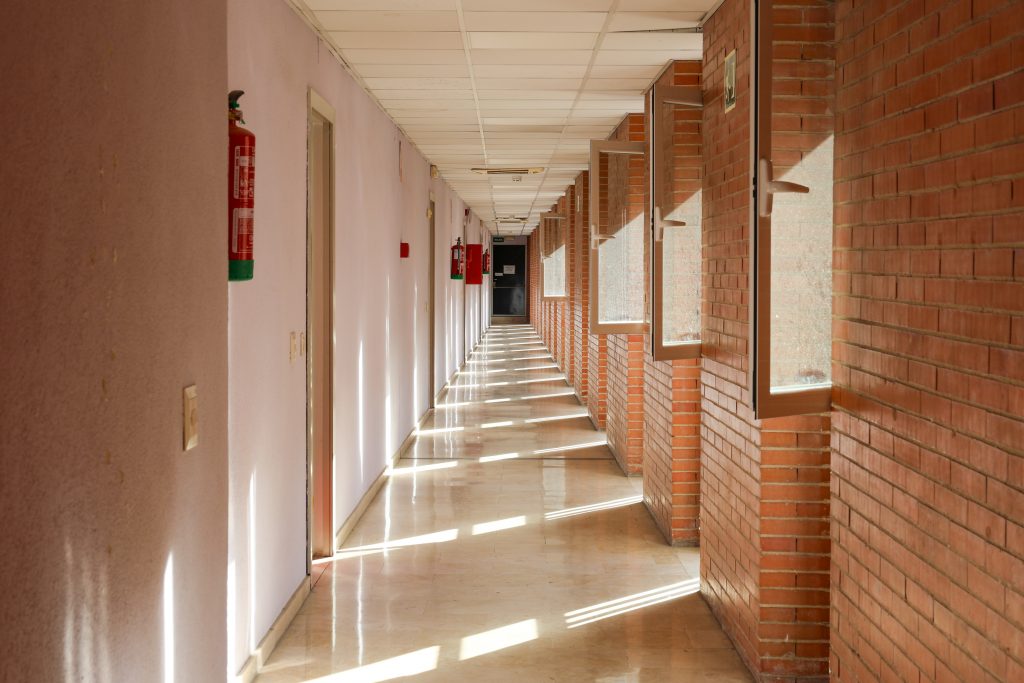
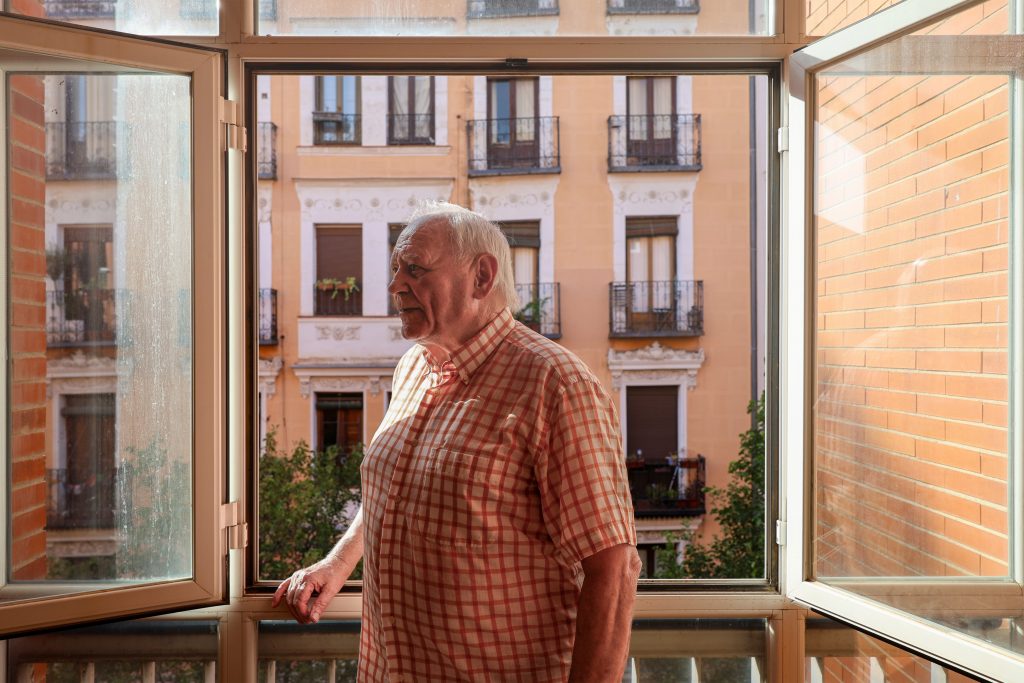
Two tomatoes ripen on his windowsill, with views of the ecclesiastical university across the road and a pine tree full of parakeets, its branches bowing under the weight of their nests. Alejandro is the last resident in Madrid’s San Francisco assisted living apartments but, just two years ago, he had 60 neighbours. In 2024, Madrid City Council ordered them all to leave urgently, citing apparent essential renovation works that could only be carried out once the residence was empty. But proof of the damage was never shown. Alejandro had a gut feeling that he and his neighbours were being unjustly thrown out – he’d always suspected the church had its eye on the land.
Twenty years ago, plans for a ‘Mini Vatican’ were drawn up but never actually carried out – having been fought into obsoletion by a local neighbourhood association, named after the Parque de la Cornisa. Instead, municipal facilities including a nursery, a sports centre and a senior citizens residence were promised. However, plans for a “City of the Church” – a colossal 25,000-square-metre Catholic corridor between the basilica and the Almudena Cathedral – never went away, and Alejandro’s residence is smack in the middle.
“This is my home until the day I die, as is stated in the contract,” says Alejandro, whose battle has become the heart of a local campaign backed by the members of the new neighbourhood association AV La Chispera. “Alejandro resisted, and with good reason,” says the association. “His resistance has not been an individual act of stubbornness or personal preference. It has been a defence of people’s rights.”
But while Alejandro has immersed himself in a years-long fight with the city council, their response has been to spread the narrative that his reluctance to leave is delaying repair works and costing other residents their permanent homes. Most residents have been relocated in care homes where they have lost a lot of autonomy and which are significantly more expensive. Others are temporarily staying with friends and family. It’s been a struggle for everyone, and an isolating time for Alejandro. But with a fresh court order just in, it’s official: “Alejandro was right, and so were we,” says AV La Chispera.
Alejandro’s victory against Madrid’s right-wing city council – an institution as powerful as it is subpar – is a testament to organised resistance. Yet, I found myself honing in on a different story. How does someone become the last person left in a building and refuse to leave? Who is Alejandro Ibáñez, and what world produced a person who has spent a lifetime refusing to back down?
“I was born in a concentration camp”
Alejandro is from Obejo, a tiny mountain village in the Sierra Morena, high above Córdoba, where the local Falangist elite controlled daily village life. His father, an illiterate hunter, refused to align himself with those in power, even if it meant struggling for work. “Instead, he survived by hunting game,” says Alejandro. “My mother would sell them to neighbours, at the market in the village, or take them to Córdoba to sell. That’s how they made a living.”
When the Spanish Civil War erupted in 1936, the village authorities compiled a list of people they wanted dead, and Alejandro’s father was on that list. He escaped into the Sierra Morena where he spent years guiding Republican forces through the mountains, helping them navigate extreme summer heat and thick winter snow. “Although he never even fired a single shot during the war,” says Alejandro, “my father was arrested almost as soon as he returned home.” This was now Francoist Spain.
His father was sent to a concentration camp and sentenced to death. Meanwhile, his wife was pregnant with Alejandro. “She would visit the camp once a week and bring food, and during one of those visits, she went into labour.” Alejandro was born inside the camp’s hospital, deep within the machinery of the fascist regime.
The war ended, and Alejandro’s father survived death row. The family tried to resume an ordinary life, but the dictatorship offered little room for normality. Beatings, informers, accusations and the constant pressure of surveillance weighed on the household and on Alejandro himself. By the age of 11, he had found a form of escape: bullfighting. “Rather than go to school, I would sneak off into Córdoba’s slaughterhouse,” where he climbed into the pens and ran at the young bulls as if he were already in the ring.
“I took my cape to Africa”
His obsession stayed with him into adulthood, when he was sent to Sidi Ifni, a former Spanish outpost on the southern border of Morocco with Western Sahara. “I went to Africa carrying my red cape. Every day I’d practise there in the field. People thought I was mad. I’d get up at six every morning, train physically, practise constantly, because I never knew when an opportunity to fight might come,” he says.
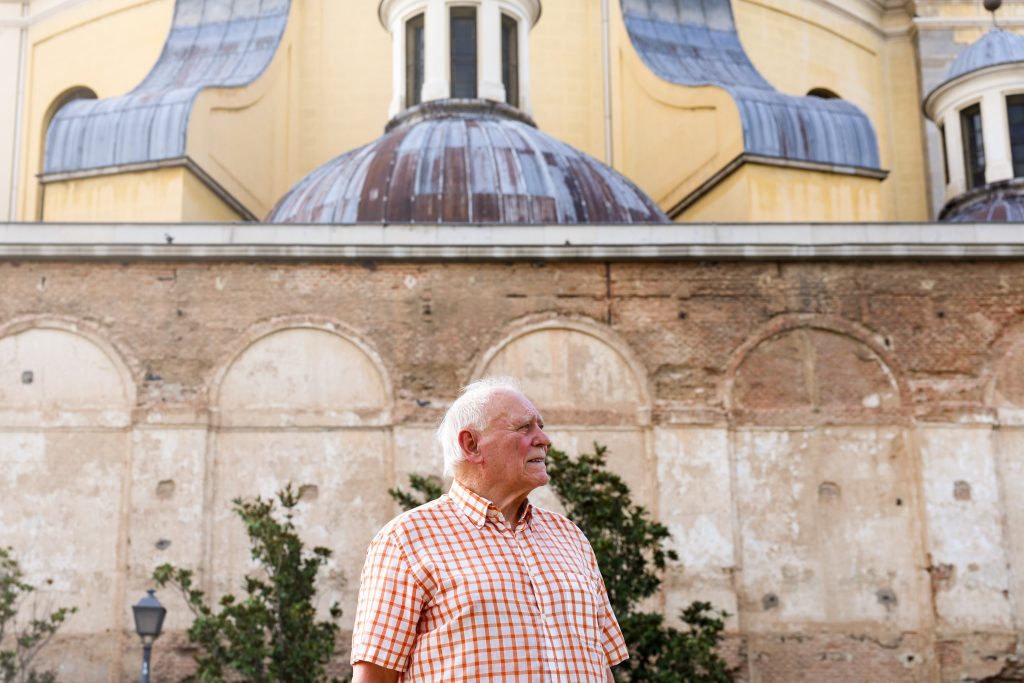
“I honestly believed I was one of the best bullfighters there was. I wasn’t famous, but I truly believed that.” Ultimately, two years of military service passed without Alejandro seeing a single bull, and his dreams of being a torero began to fade. He started to sense a deep inequality in bullfighting: “The idea that you could earn a million pesetas for a single afternoon’s work. I couldn’t accept that. Meanwhile, ordinary spectators still have to pawn their belongings just to buy a ticket,” he says.
In his 20s, Alejandro moved to Madrid and began a career in construction. He briefly left Spain to work in Dutch shipyards, where he lived in barracks with around 1,500 other workers. “It wasn’t luxurious, but it was decent.” Then, the company tried to move them into newly built apartment blocks with rooms of just 12 square metres, sleeping four workers per room in bunk beds: “And they wanted to charge us a fortune for it,” he recalls.
“I refused to leave.” He then helped organise a strike, bringing the factory to its knees for 12 days. “The company cut off our water and electricity to force us out, but I stayed until my contract had ended,” he says. “It reminds me of what’s happening today.”
“Political interests were at play”
The constant rush of water from his kitchen tap almost drowns out his soft voice. “I have to leave it running,” he explains. “Otherwise, the rust builds up.” The flat has no built-in air conditioning; there are leaks, patches of rust and signs of neglect, but the problems appear to stem from poor building maintenance rather than any obvious structural failure, which is exactly what Alejandro has been insisting for years.
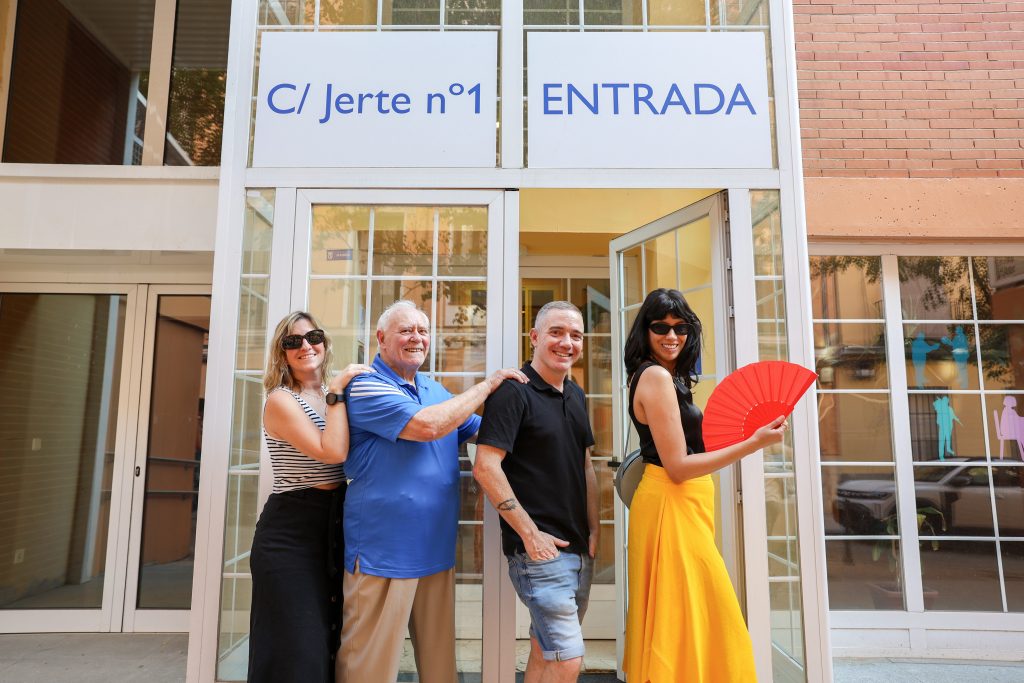
He walks towards his bedside table, opens the top drawer and proudly pulls out the document confirming he can stay in his home. In a major win, the courts last week ruled that Madrid City Council has no legal right to enter his apartment, pointing to a lack of technical evidence justifying the need to completely empty the building. The court order makes clear that a measure of this kind cannot be granted automatically, but must be justified as necessary, appropriate and proportionate – evidence that the city council has repeatedly failed to provide.
No technical report was ever provided explaining the risks of living in the residence or why the works could not be carried out in phases. Nor has the council demonstrated that demolition is necessary – one of the justifications the administration gave for the need to empty the building entirely.
“This is a ruling that stops a poorly conceived municipal operation in its tracks and rejects yet another attempt to push it through by force,” says the association. Alejandro’s lawyer, Víctor Palomo from the cooperative CAES, believes that the city council failed to follow the proper procedure, explaining that “political interests were at play and that these actions were not properly justified.”
But this win also sends a much bigger political message: that the city council cannot coerce and grind down residents, which appears to have been their key strategy. As AV La Chispera explains: “It is not enough to string together administrative decisions and then attempt to impose them by force.”
“I always knew we were going to win”
With the support of his neighbours from the association, Alejandro has spent the past week doing media interviews and broadcasts, including with me. The team of neighbours are working hard to keep the media momentum up while also calling for renovation works to begin without further delay. Even though Alejandro has five children, it’s his local neighbours that have become his companions in the struggle in recent years. “I always knew we were going to win,” he says. “That’s why I’m still here. Because if we stop fighting, they’ll take everything away from us.”
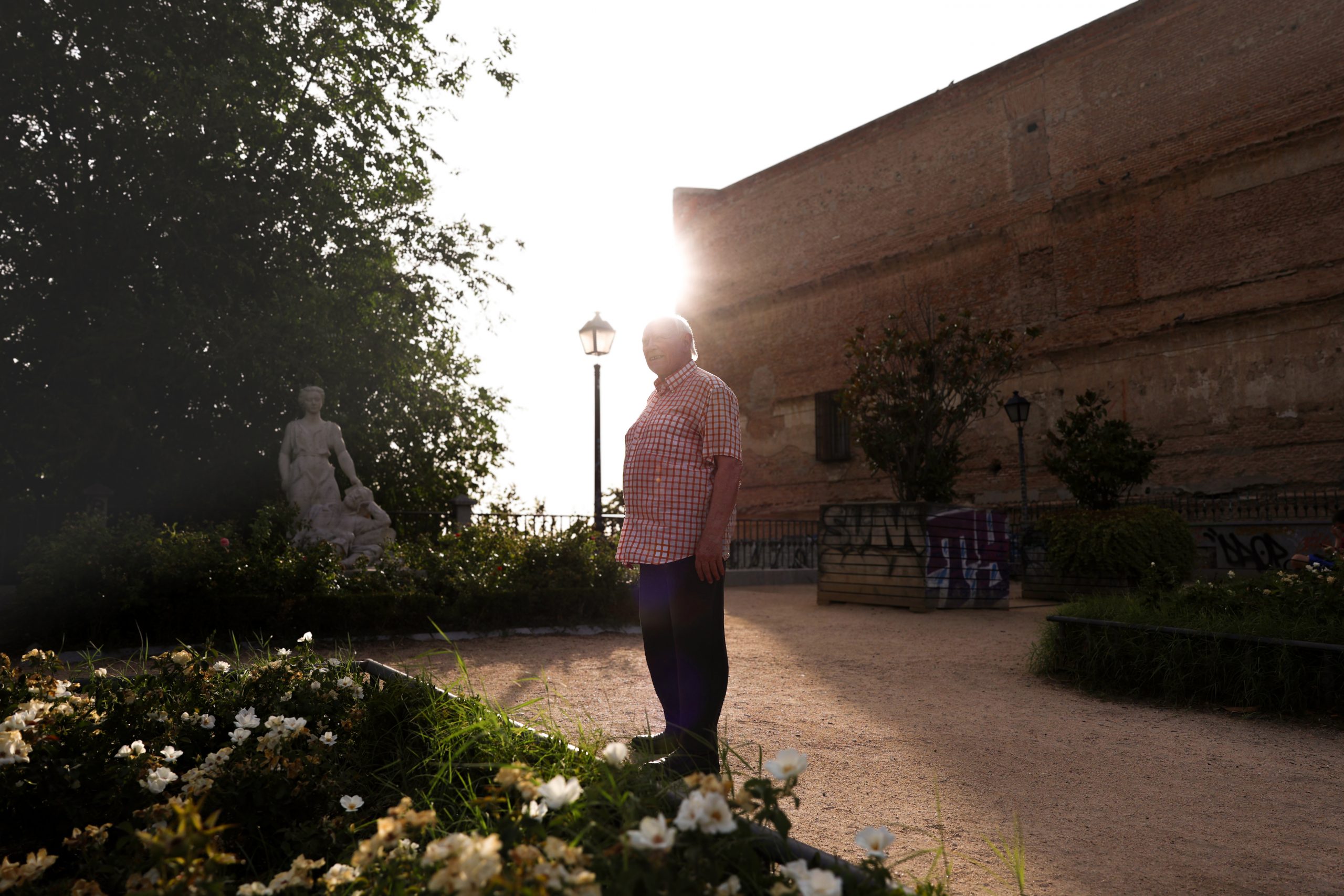
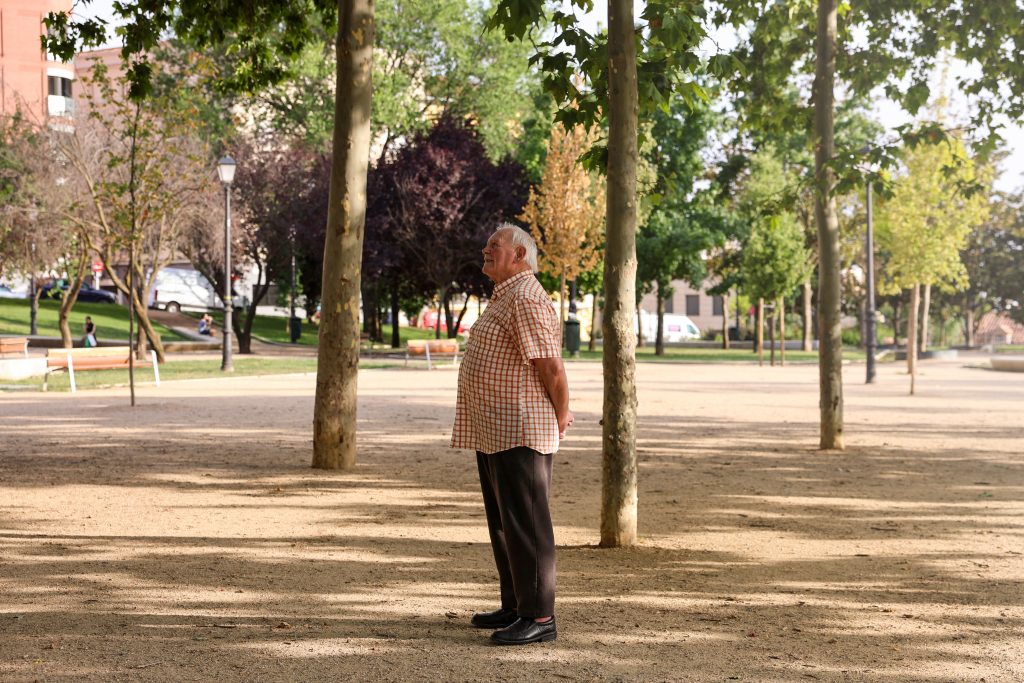
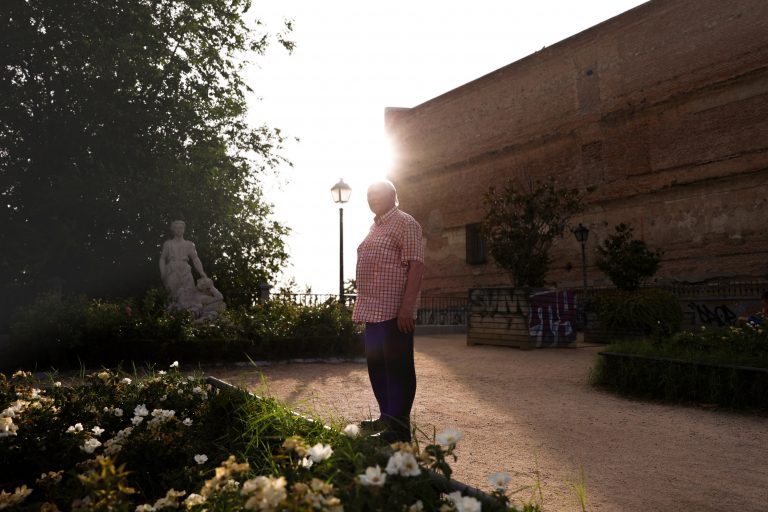
As the sun begins to set and the air cools by a few degrees, we take a walk around Parque de la Cornisa, behind the residence. I take some photos of the person I feel Alejandro is – a stoic gentleman whose painful past is behind him but whose future is bright. It is also unwaveringly public – by which he seems unfazed. He guides me past sweeping views over south Madrid, backed by the crumbling redbrick spine of the basilica. It feels a world away from the tiny mountain village in Córdoba where he grew up under Francoist repression, where he first learned to fight – first with bulls, and later for justice.
I ask Alejandro if he ever misses bullfighting and he tells me he tries his best only to look forwards. “I don’t even keep photos, the nostalgia is too painful,” he says. But the fighting spirit stays with him, as he asks me, “Did you know that the bull dies on its feet?” I ask him, “Is that your plan too?” to which he smiles and says, “Yes. I will die standing. But not today.”
SUPPORT THIS PLATFORM
You may have noticed that I don’t run ads, nor accept sponsors or investors. Independence is everything and what I decide to publish will not be influenced by those in a position of capital, privilege or power. Therefore, I invite only you to support this platform and only you to help us keep doing what we do. Support MNF for as little as €1 per month, which you can cancel at any time.
Leave a Comment