

Author: Leah Pattem / Photos: Dani Piedrabuena & Leah Pattem
On Wednesday morning, Spain’s public broadcaster RTVE devoted extraordinary attention to Maricarmen’s eviction. Its coverage followed the 87-year-old through her final hours in the home where she had lived for more than 70 years, and continued after she was carried out on a stretcher.
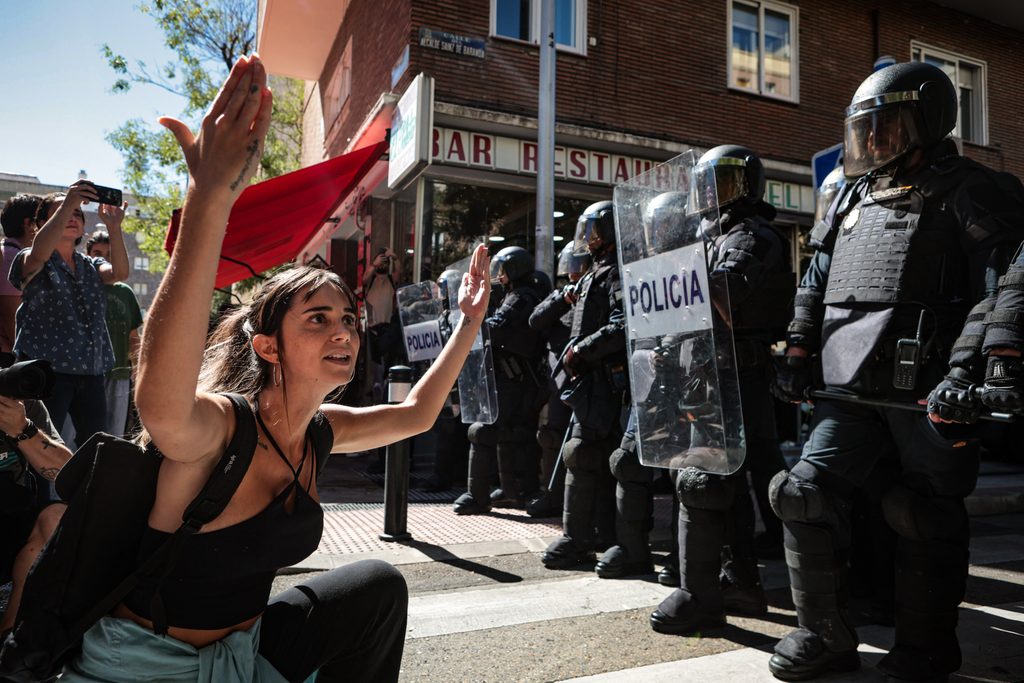
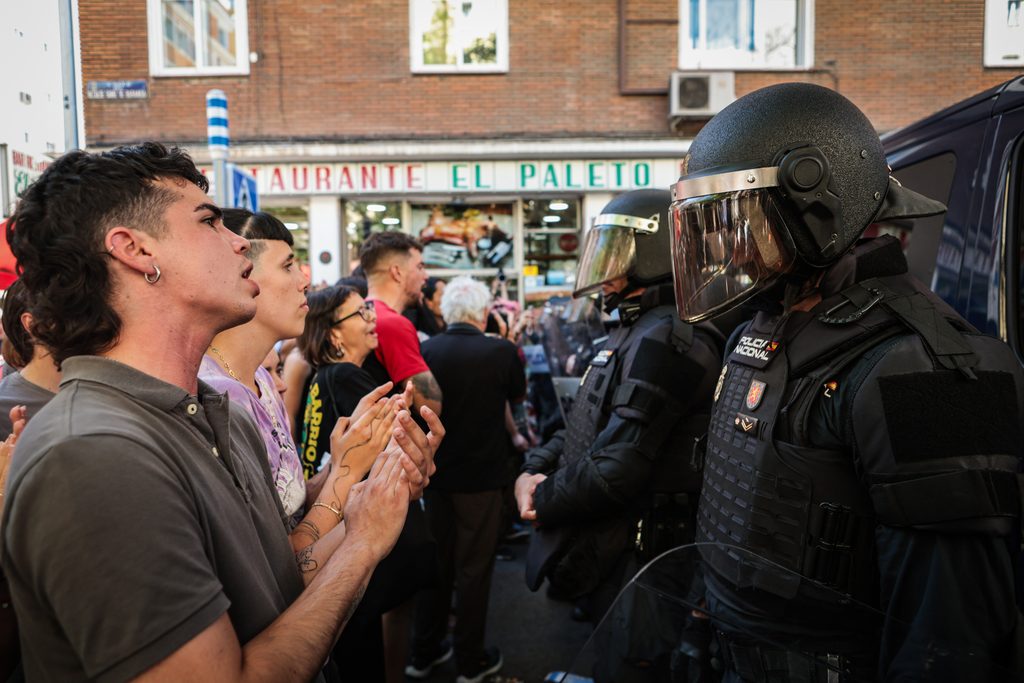
Images of her being removed from her home by ambulance as hundreds of people protested outside appeared across the world’s television channels and front pages, and are still circulating.

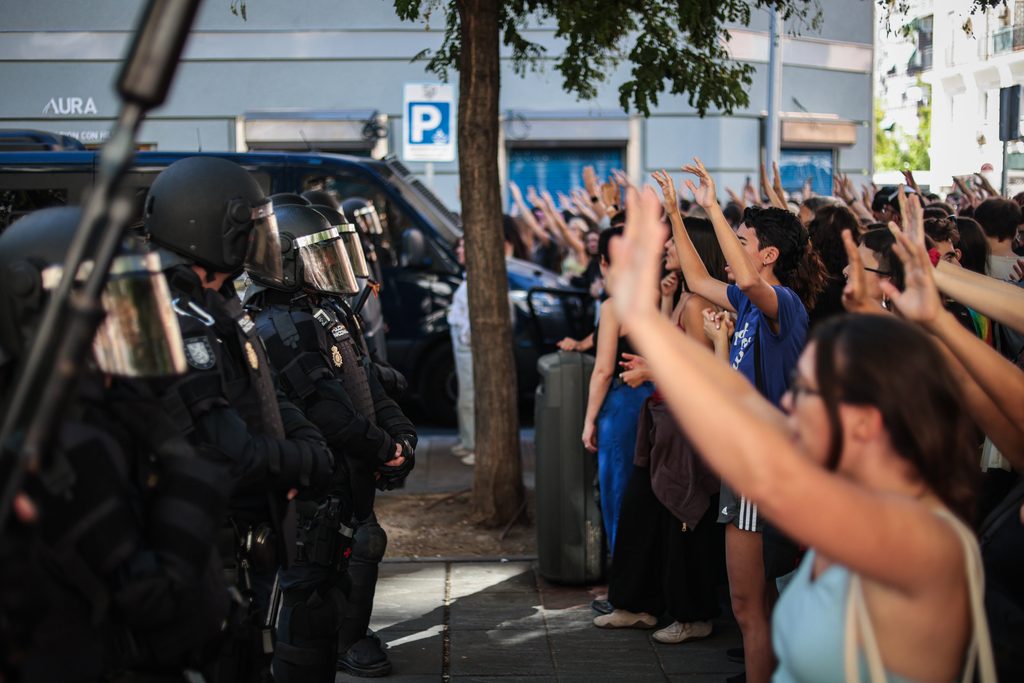
The scale of the response was striking because we have seen something similar before, but not for a long time. Seven years ago, the evictions at Calle Argumosa 11 in Lavapiés produced almost exactly the same choreography: tenants and supporters barricaded themselves inside, crowds gathered outside, police filled the street and journalists descended on the building.
Rosa became a symbol of Madrid’s housing crisis, and her case prompted national political attention. Pedro Sánchez published a tweet saying that situations like Argumosa 11 should not be allowed to happen again. And yet here we are again.
But Maricarmen’s eviction is part of a much more organised and coordinated housing action. As activists were mobilising around the elderly woman, Madrid was hosting The District, an international real-estate investment conference. Isabel Díaz Ayuso opened the event last week, presenting Madrid as a goldmine to property investors. Housing activists disrupted the opening, and then went to Maricarmen’s house where they camped out overnight.


Maricarmen had lived in her flat for seven decades. After the property changed hands to an investment fund, the new owner sought to replace her old rent of around €500 with a much higher market rent of €1,600 a month – more than her monthly pension of €1,400. But this is not an isolated case, rents have doubled in a decade and the city is a ticking time bomb for displacement.
Maricarmen’s eviction exposed failures and gaps at several levels of the system. At regional level, Madrid’s PP government has chosen not to apply the national rent-control mechanism in designated stressed areas (pretty much the whole city), while the regional and city governments promote policies centred on increasing supply and attracting investment.
At national level, the PSOE-led government is expected to take a new housing royal decree-law to the Council of Ministers on 29 September, with measures including longer rental-contract extensions, regulation of seasonal and room rentals and measures intended to increase affordable housing. The decree would still have to be approved by Congress afterwards.
But the Sindicato de Inquilinas (Tenant Union) are demanding more: the immediate approval of the Maricarmen Decree, which includes five urgent measures aimed at ensuring that housing ceases to be treated as a business. These include structural measures to stop evictions; the automatic renewal of all rental contracts, making them indefinite, as already happens in England, Germany and Austria, for example; the regulation of seasonal rentals; a freeze on rent increases linked to the Consumer Price Index; and extensions of existing rental contracts.


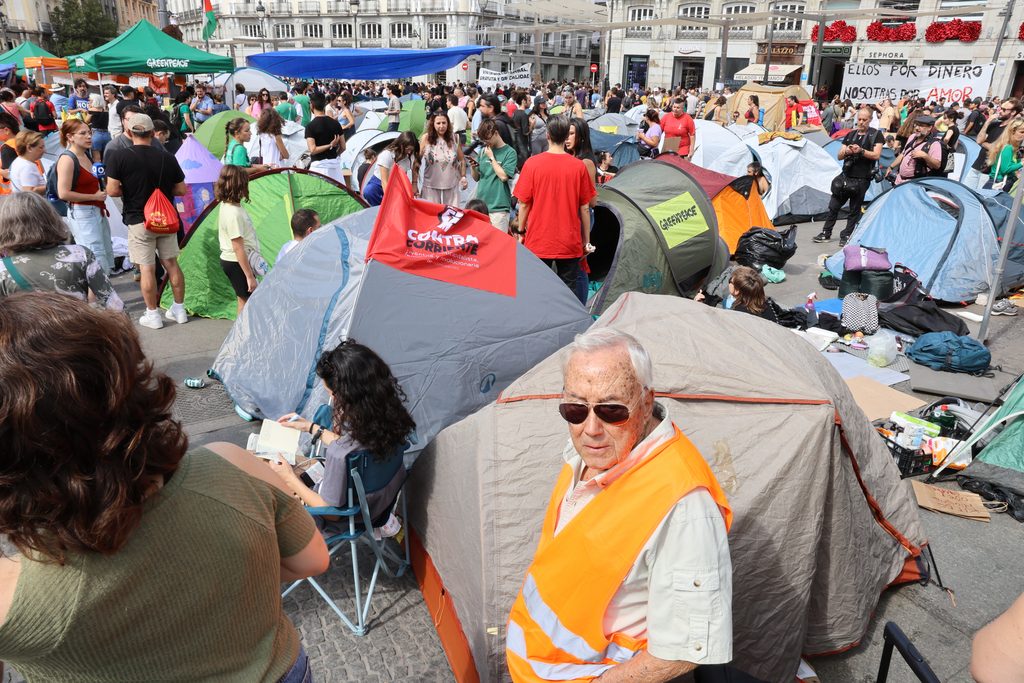
That is the direct connection to the Tent Barrio now occupying Puerta del Sol. The camp grew out of the mobilisation around Maricarmen’s eviction, followed by two protests: one on Wednesday night in front of Ayuso’s €6.3 million flat which she allegedly purchased with public money, and another on Saturday which saw a reported 250,000 people take to the streets.
But its target is broader: the people camping in Sol are demanding that the government use Tuesday’s opportunity to change the rules that govern Spain’s housing market. They say they will stay until the government meets their demands. Until then, more people are bedding down every night.

Leave a Comment