
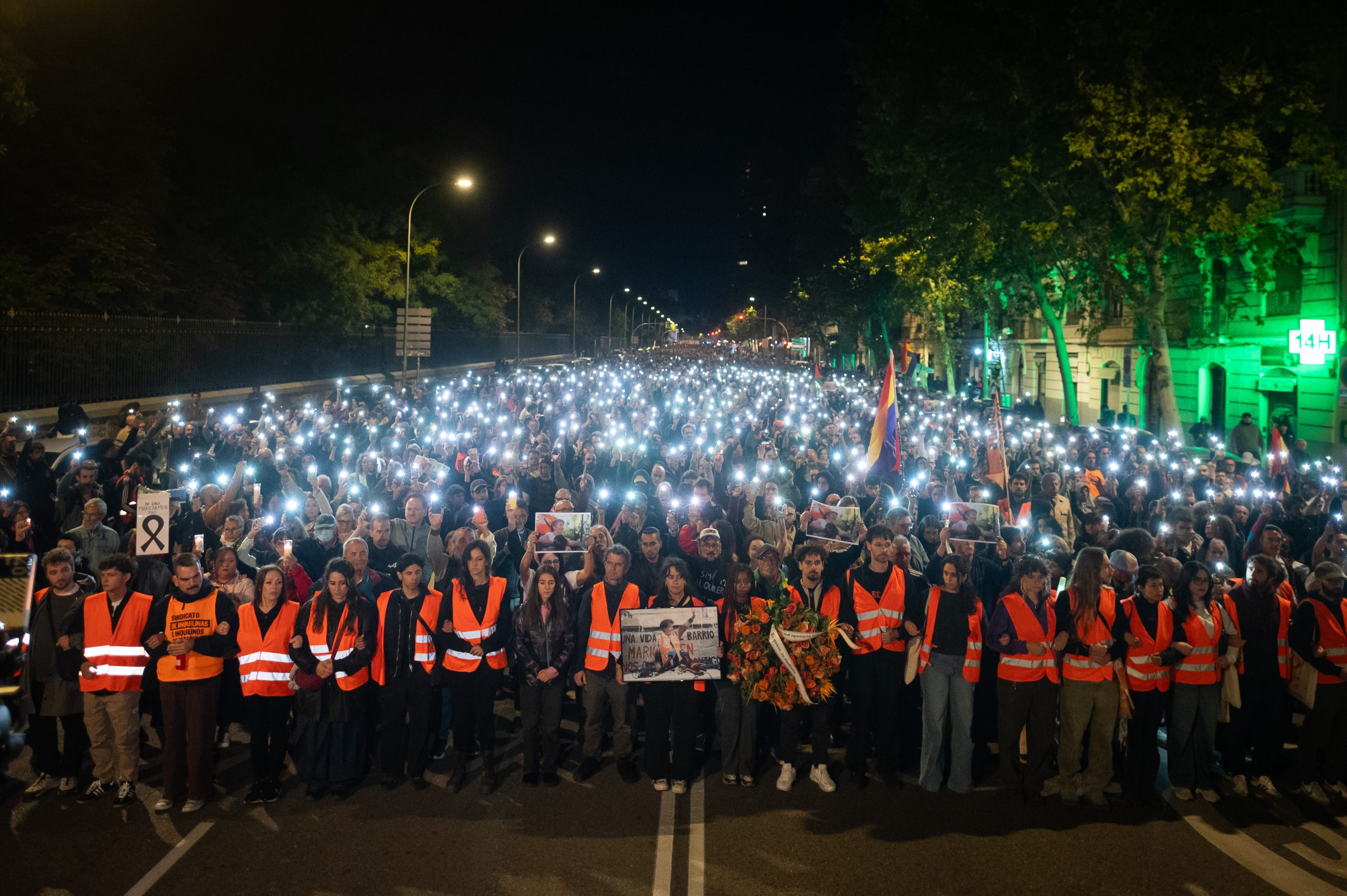
Welcome to The No Frills Podcast. Join me on the streets of Spain to explore what people are really thinking and feeling. In this first ever episode of The No Frills Podcast, I record the birth of a new social movement that has culminated in Madrid’s Sol encampment, where thousands bed down in a “tent city” every night as a united protest against a housing system in crisis.
From a generation of people afraid they will never be able to afford to leave their parents’ homes, to elderly neighbours fighting to stay in theirs, this is a story of grief but also hope, and the extraordinary convergence of circumstances that brought down the Spanish government.
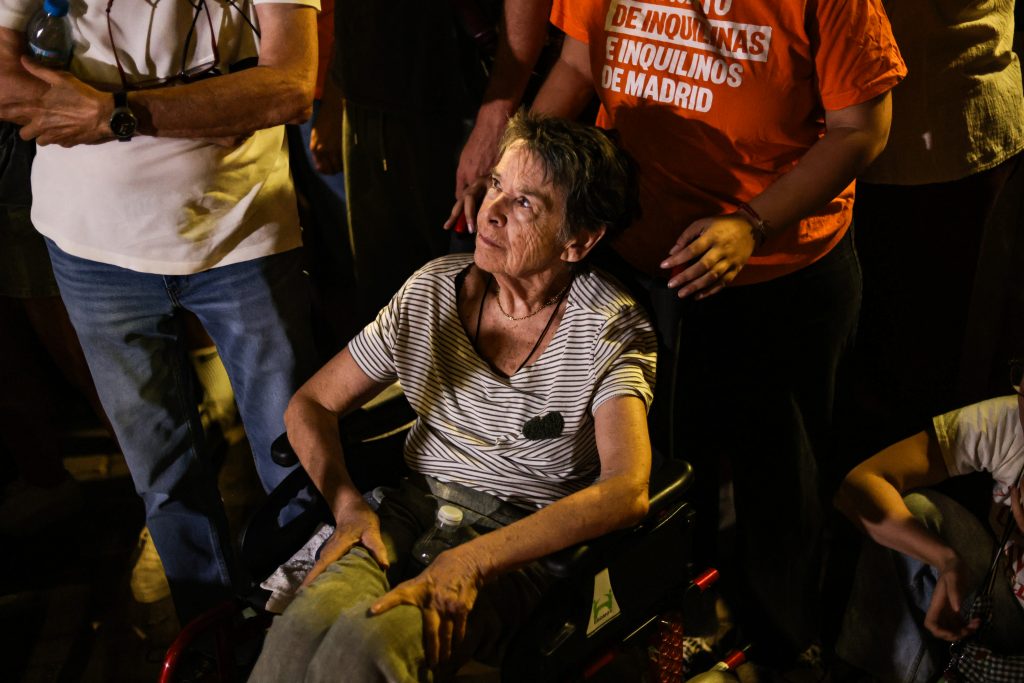
The eviction of Maricarmen, an 87-year-old woman who had lived in her Madrid home for 70 years, helped ignite a nationwide housing movement. After an investment fund raised her rent to almost twice her pension, her years-long fight to remain in her home ended with a dramatic eviction. Activists formed a human barricade to prevent police from entering, but officers eventually broke down her front door and paramedics carried her out on a stretcher. The images shocked Spain, triggering spontaneous protests and helping spark an encampment in central Madrid.
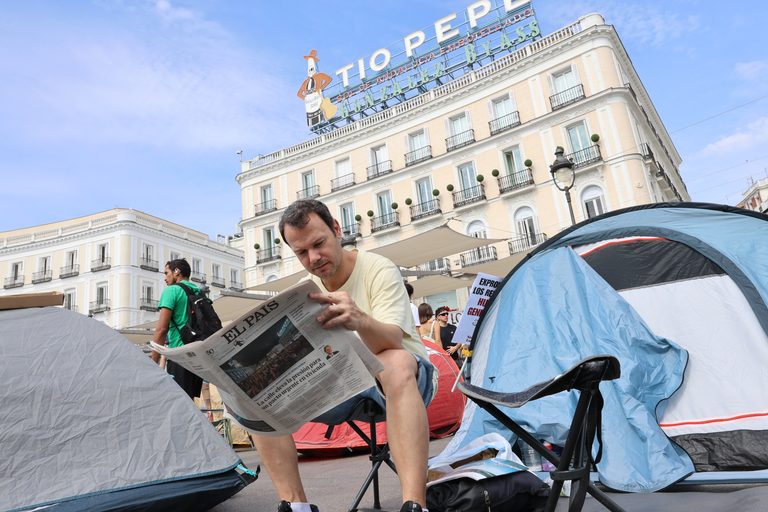
More than a thousand tents soon filled Puerta del Sol, creating a makeshift community complete with kitchens, food distribution points, medical facilities, workshops and information tables representing more than 20 collectives. The encampment emerged amid an extraordinary convergence of events: an international gathering of housing activists organised by Madrid’s Tenants Union and a real estate conference promoting the city to property investors.
Inside the camp, young people spoke about their fear of a future without secure housing. Elena, 22, described being frightened that she might never be able to afford to leave her parents’ home. For her, spending months in a tent felt preferable to a lifetime of financial insecurity. Yet the movement is not just about young people. It brings together generations united by the threat of unaffordable rents, eviction and displacement.
That solidarity has already produced results. Hundreds of people left the encampment to support a 65-year-old woman with cancer facing eviction. Their intervention helped stop the eviction, postponing it until 14 October. Elena described the experience as deeply moving: strangers had come together to defend someone they did not know, demonstrating what collective organising can achieve.
The episode also explores the struggles of older residents in Madrid’s La Latina neighbourhood. Alejandro Ibáñez, 81, faced losing his protected accommodation because of proposed renovation works. With help from a neighbourhood association and legal support, he challenged the decision, and a judge ruled in his favour. His case raised wider questions about the elderly residents who had already been forced to leave. As Marianne Gonçalves from neighbourhood association La Chispera explains, losing a home can also mean losing independence, friends and an entire community.
Another case involves Paquita, an 84-year-old woman with Parkinson’s disease who has faced an attempted eviction by a real estate investment company. Activists fear her home could become tourist accommodation, reflecting a wider transformation of central Madrid, where long-term residents are increasingly under pressure to leave.
The current movement also echoes Spain’s 15M protests of 2011, when demonstrators occupied Puerta del Sol amid economic crisis, unemployment and austerity. Journalist and academic Pablo Sánchez León, who was involved in the 15M, explains that today’s uprising has a more direct focus: housing. With wages increasingly insufficient to secure independent living, housing has become a workers’ issue as well as a social one. The episode examines calls for more radical housing policies and a proposed nationwide general strike in November.
Behind the encampment is years of grassroots organising by groups such as the Madrid Tenants Union. Organiser Hannah Fakir describes how the union helps tenants understand their rights, organise their neighbourhoods and collectively challenge abusive landlords and investment funds. Maricarmen’s eviction brought these efforts together in an unexpected wave of mobilisation. As people began pitching tents in Sol, the camp grew into what Hannah calls “a city within a city”.
Yet the movement’s central message comes from Maricarmen herself. When she believed she might be able to return home, she asked a question that came to define the struggle: “What about all the others?” She had repeatedly said she was fighting so that others would not have to endure the same ordeal.
Maricarmen died in hospital on 7 October, but her name remains at the heart of the movement. As Elena puts it: “We are all Maricarmen. We can be Maricarmen at any moment.”
This episode tells the story of a housing crisis that can affect anyone, regardless of age or circumstances – and of the people turning individual struggles into collective action. It is a story of grief and uncertainty, but also of solidarity, resistance and the belief that everyone deserves a place to call home.
Credits
Cover image by Marcos del Mazo. Interviews with Cristina and Elena, both 22, who are speaking from inside the Sol encampment; Marianne Gonçalves from the La Latina neighbourhood association La Chispera; Pablo Sánchez León, a journalist and historian based in Madrid; and Hannah Fakir, organiser with the Sindicato de Inquilinas (Madrid Tenants Union).
Research, recording, interviews, production and editing by Leah Pattem.
SUPPORT THIS PLATFORM
You may have noticed that I don’t run ads, nor accept sponsors or investors. Independence is everything and what I decide to publish will not be influenced by those in a position of capital, privilege or power. Therefore, I invite only you to support this platform and only you to help us keep doing what we do. Support MNF for as little as €1 per month, which you can cancel at any time.
Leave a Comment