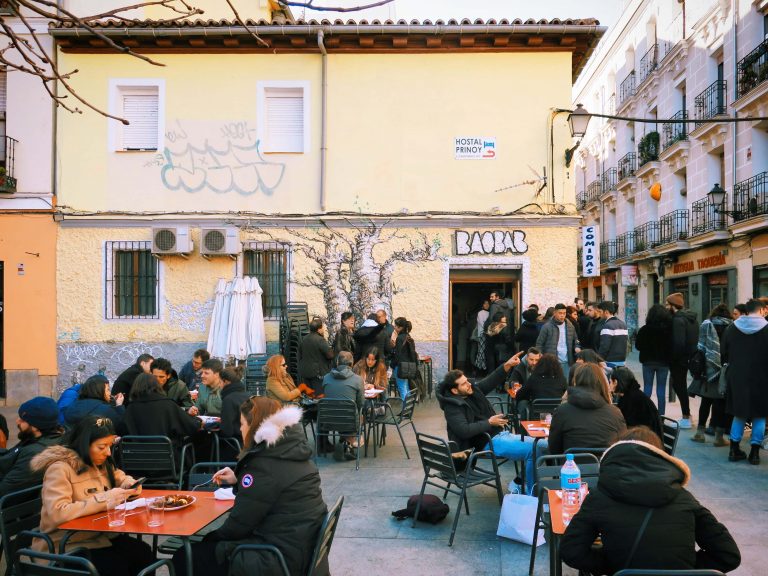
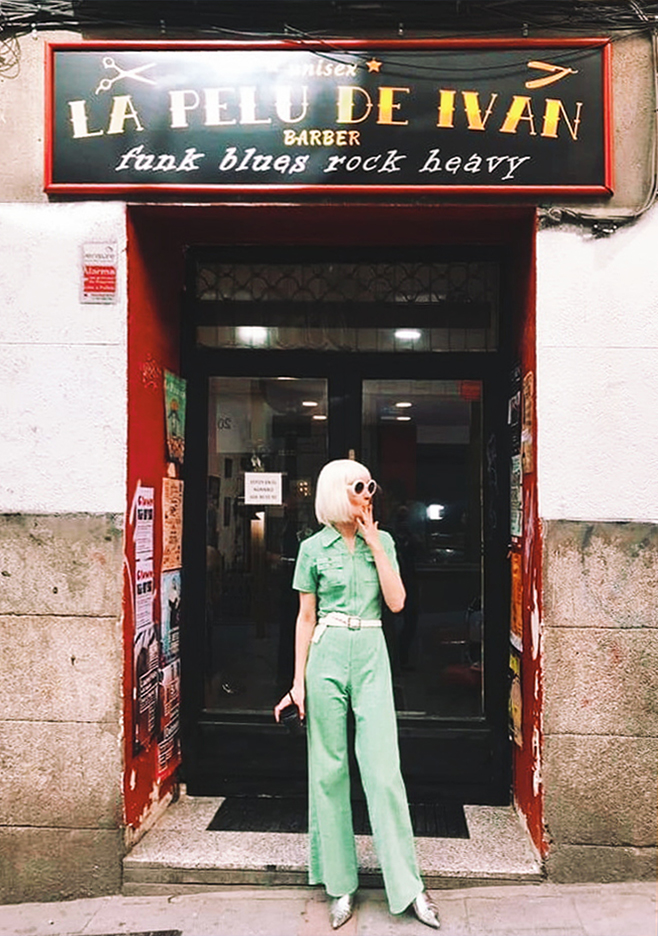
A year ago, my photo series of 100 of Madrid's no-frills bars reignited the nation's love for a time-honoured aspect of Spanish culture, but around 20 of these no-frills bars are actually Chinese-owned.
I'd like to transport you to a place a few miles up the road from where I grew up. It's a tiny, windswept port town that had its heyday up until the 1960s. After that, the industries shifted outwards, like the dunes that shield Blyth from the North Sea, switching from mining coal to farming wind.
I'm sitting on a concrete bench on Plaza Nelson Mandela, taking in the warm winter sun on my face. A local Senegalese man wearing an ivory silk boubou pours his friends cups of hot black coffee from a canister. On a bench near them, a group of young Argentinians top up their cups of mate and share a smoke.
Yesterday, the people of Madrid make their thoughts crystal clear: don't evict Baobab! So far, this emotive Instagram post has been shared by 2,793 people in their stories, and viewed by 32,557. To put things in perspective, that's about 10 times more people than my average Madrid No Frills Instagram posts.
Earlier this year, I discovered that I had a long-lost twin in Buenos Aires: Bar de Viejes. This is an Instagram account that was born out of a desire of one person to document the beautiful old Buenos Aires bars, especially those that are under-appreciated and disappearing.
Tomorrow, all cars and buses will be diverted from the city centre, and shepherds will herd their flocks through Madrid. In a spectacle witnessed by lots of confused onlookers, hundreds of sheep will stroll through our grandest boulevards.
In 1919 – the year of its inauguration – Madrid’s metro consisted of just one line with eight charming little stations. Exactly 100 years later, this vast subterranean labyrinth is the seventh-longest underground system in the world and hosts around two million journeys every day.
Let me take you to Porto, where I share with you all my no-frills discoveries, ghost trails and touchable portals to the darkest era of Portugal's past.
There are few streets in Madrid with such a well preserved traditional shopping district. Green grocers, bodegas, a coal merchant's and a wicker store are just some of the living museums I found on the short stretch of Calle Calatrava and its surrounding streets.
It's raining but perhaps you've already been to all the museums, or maybe you just fancy something a bit less obvious such as spending the afternoon in a mercado, doing a no-frills bar crawl around a barrio you haven't visited before, exploring the labyrinthine tunnels of the old tobacco factory or finally enjoying it being cool enough to eat hearty food again! Here are 10 rainy-day activities that you won't find anywhere else on the Madrinternet...
An elderly woman dressed in all black is straddling the wrong side of a first-floor balcony. Standing up there with her is another elderly woman wearing a floral smock, bellowing unsolicited advice about how her friend should tie up the bunting. Fierce high-rise arguing descending into laughing, and I watch on in horror yet reassurance that, somehow, these ladies have got it handled. After all, it is quite possibly their 90th year of decorating the streets.
One of the sites where Franco’s army would learn to build railroads, bridges and trenches now hosts an army of Madrid’s underground artists. Welcome to Zapadores (trenchers), Madrid's City of Art.
What is an urban sky frame? It's a worm's-eye view centring around the sky, almost seamlessly framed by urban structures (a term invented right here, right now).